Oderbruchkippe in Volkspark Prenzlauer Berg
The Oderbruchkippe in Volkspark Prenzlauer Berg is a double hill of around 15 million cubic metres of rubble, much of it from the destroyed Alexanderplatz, rising almost forty metres above the surrounding streets. Its highest point, the Pappelplateau, reaches 90.9 metres, the sledding slope runs out gently, and Riesling has grown up there since 2009.
A Double Mountain from the Rubble of Alexanderplatz
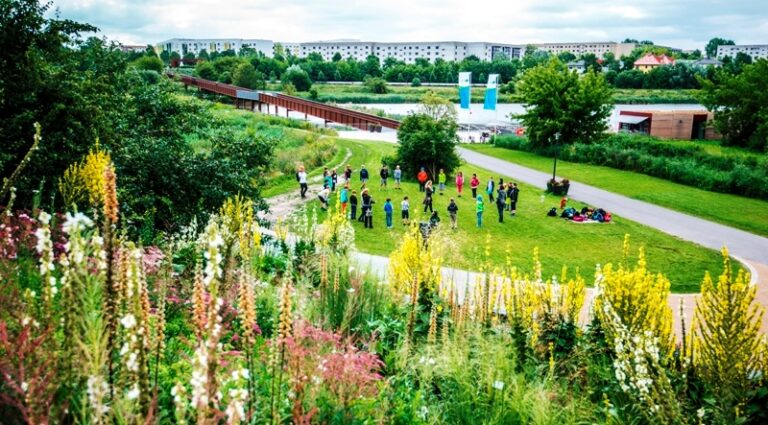
Where Volkspark Prenzlauer Berg lies today, there were meadows, fields, and a waste disposal site for Berlin’s market halls around 1900; later, allotments were added. In 1945, the main line of defense for the city ran right through the garden complex. Afterwards, the Oderbruchkippe grew here, named after the nearby Oderbruchstraße: about 15 million cubic meters of rubble, transported by trucks and a rubble railway, largely from the destroyed area around Alexanderplatz. The district office dates the landfilling to the years 1955 to 1977, and the allotments were cleared by 1963. From mid-1967, topsoil was placed on the rubble, and pioneer trees were planted: poplars, ashes, maples, black locusts, and willows, whose leaves formed a humus layer over the decades. Many Berliners helped as part of the National Reconstruction Program. In 1969, the site received its current name. The double mountain lies almost forty meters above the adjacent areas, the Poplar Plateau reaches 90.9 meters, and the park covers around 29 hectares, about 40 percent of which is open meadowland.
Toboggan Run, Vineyard, and an Adventure Playground Halfway Up
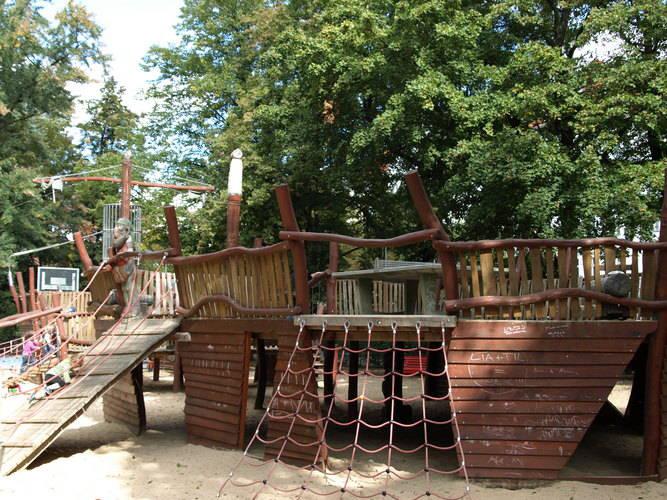
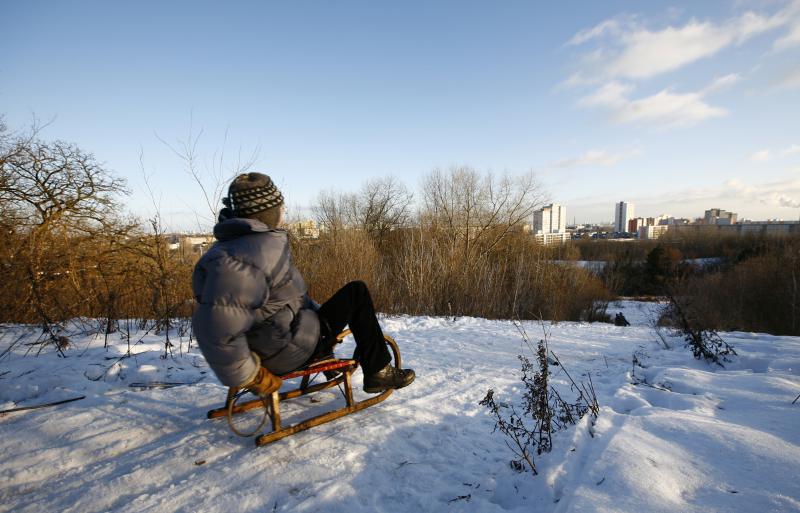
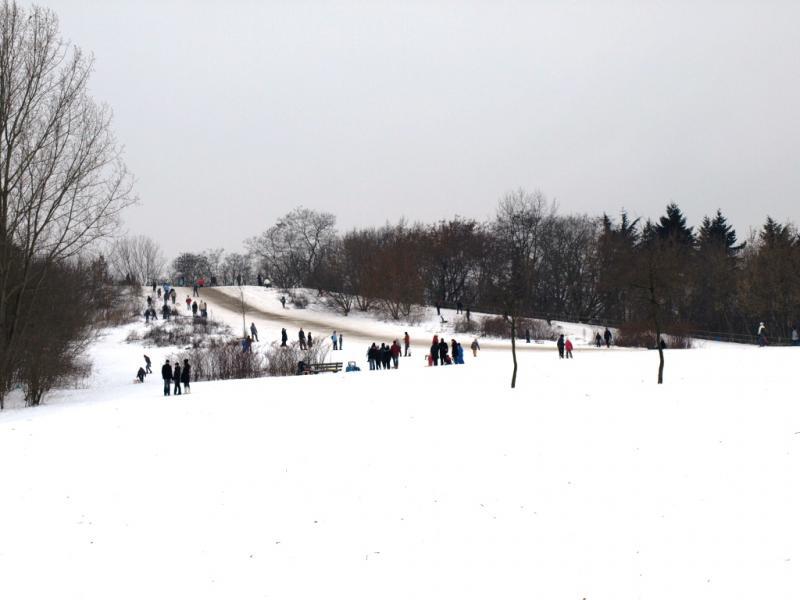
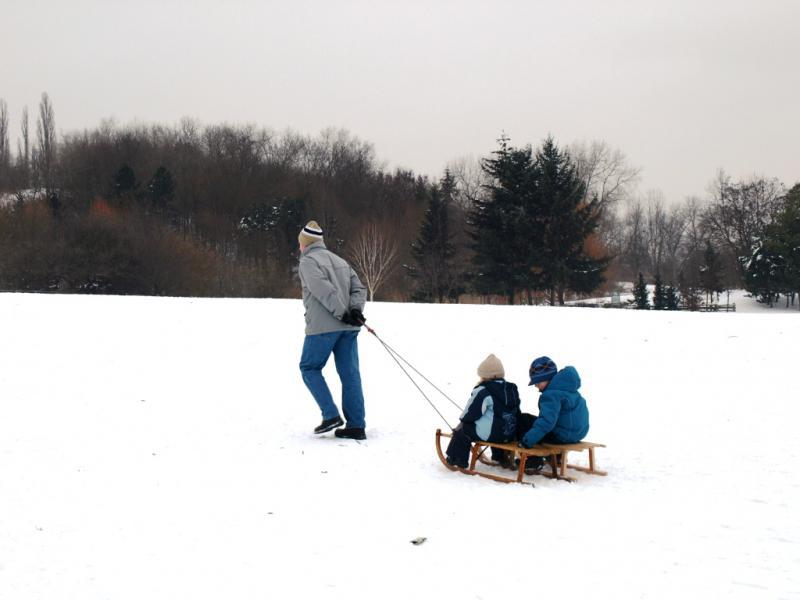
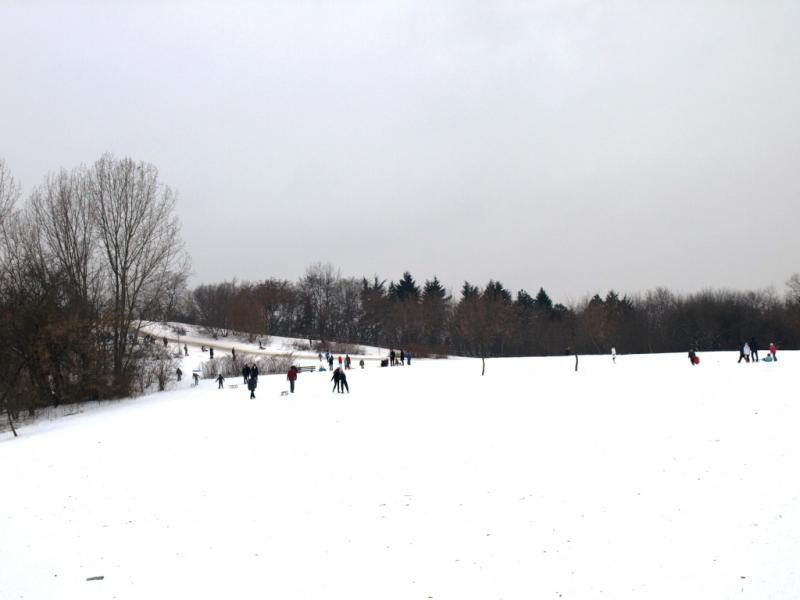
Tobogganing on the Oderbruchkippe takes place on the gently sloping hillside, making it one of the more relaxed hills on this list. The district office lists three hills with plateaus at 91, 90, and 69 meters high. Halfway up is a playground, which was expanded into an adventure playground in 1997, along with a wetland biotope and, as early as 1971, a botanical nature trail. Unusual for a rubble mountain is the vineyard: Since 2009, a Berlin association has been cultivating Riesling on a sunny slope, which is not sold but given away in exchange for donations, and guided tours are offered. Foxes, hares, rabbits, and raccoons live around the slopes; 57 bird species and over a hundred wild-growing herbs have been counted. The park is part of a biotope network and serves as a fresh air corridor for the city center. When tobogganing, one should pay attention to the trees: The ground is unstable, trees frequently break off, and during a path renovation, storm-damaged poplars, black locusts, and maples were felled. The slope is not supervised; tobogganing is at your own risk. Tram M5 stops directly at the park edge with the Hohenschönhauser Straße and Oderbruchstraße stations.

Top10 Redaktion
Erfahrungsbericht vom 29.10.2026
Admission
Volkspark Prenzlauer Berg is freely accessible, tobogganing is free.
Height
The Poplar Plateau, as the highest point, reaches 90.9 meters above sea level. The double mountain lies almost forty meters above the adjacent areas.
The Slope
Tobogganing takes place on the gently sloping hillside. The district office lists three hills with plateaus at 91, 90, and 69 meters high.
Safety
Not a supervised facility; use is at your own risk. The ground is unstable, trees frequently break off, and attention should be paid to trees and deadwood on the slope.
History
Filled with about 15 million cubic meters of rubble, predominantly from the destroyed area around Alexanderplatz. The name comes from the nearby Oderbruchstraße.
Greening
From mid-1967, topsoil was placed on the rubble, along with poplars, ashes, maples, black locusts, and willows. In 1969, the site received its current name.
Vineyard
Since 2009, a Berlin association has been cultivating Riesling on a sunny slope. The wine is not sold but given away in exchange for donations, and guided tours are offered.
For Children
Halfway up is a playground, which was expanded into an adventure playground in 1997. Additionally, there is a wetland biotope and a botanical nature trail from 1971.
Animals and Plants
Foxes, hares, rabbits, and raccoons live in the park; 57 bird species and over a hundred wild-growing herbs have been counted.
Size
Approximately 29 hectares, about 40 percent of which is open meadowland and almost one-third woodland and shrubs.
Kite Flying
The open plateaus are also a popular spot for kite flying in dry weather.
Transport and Contact
Tram M5 stops at Hohenschönhauser Straße and Oderbruchstraße stations directly at the park edge. Schneeglöckchenstraße 61, 10407 Berlin.
Opening Hours
- Daily: Open 24h
Address
Schneeglöckchenstraße 61, 10407 Berlin, Deutschland