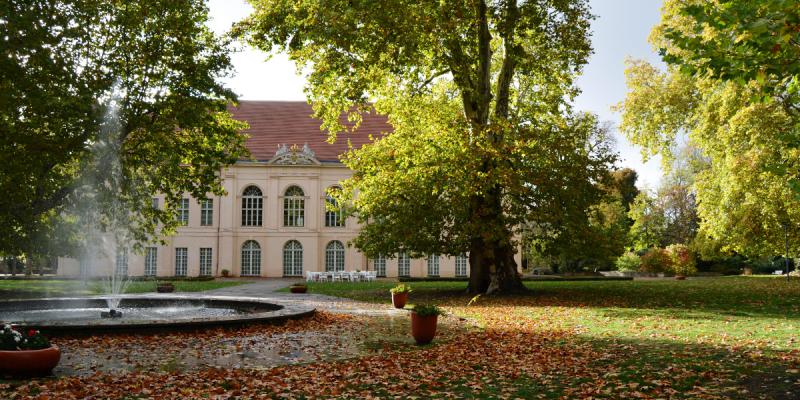
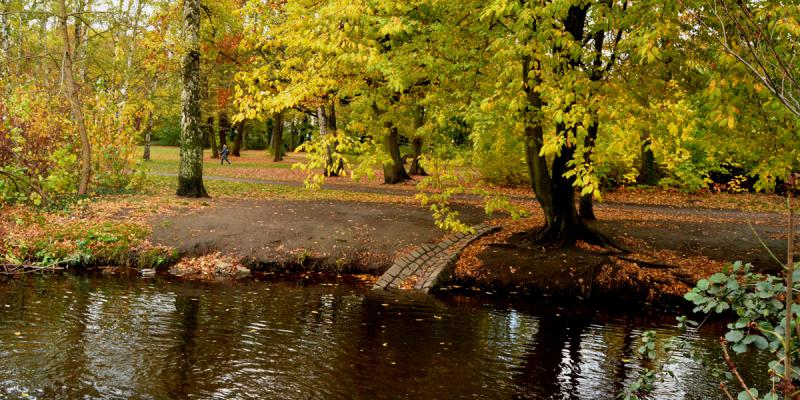
Pankow-Niederschönhausen Palace Park is one of Berlin's green photo spots: 30 hectares of landscaped park by Peter Joseph Lenné along the Panke, plus a walled garden from the 1950s with a tea house, rose garden, and a six-meter-high fountain. Admission is free, tripods are allowed, but drones are prohibited. A bridge in the middle of the park is currently closed.
Pankow-Niederschönhausen Palace Park as a Photo Spot on the Panke
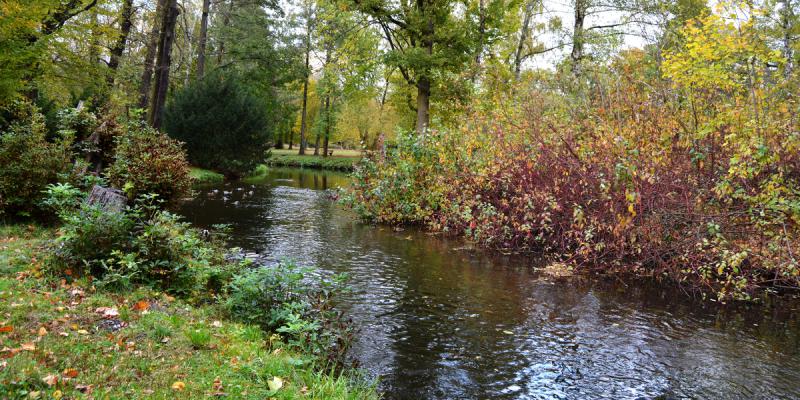
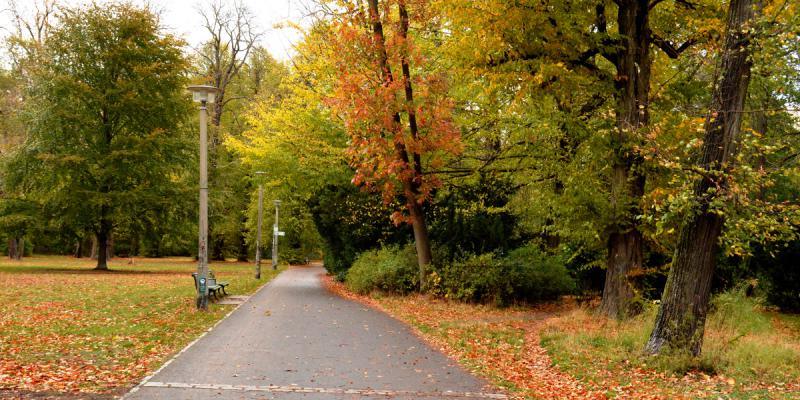
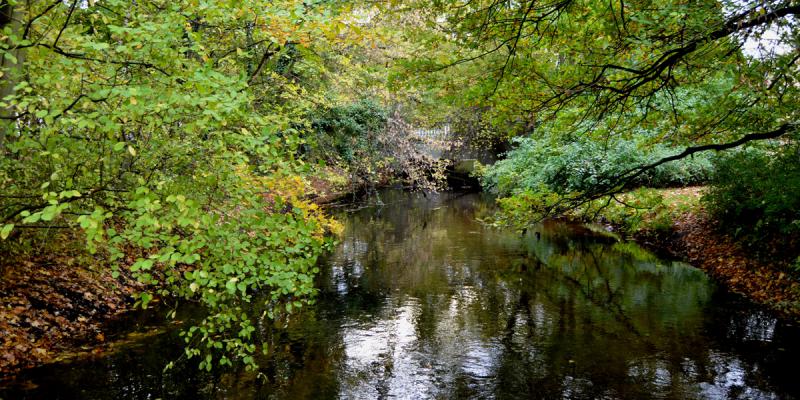
The park consists of two parts with very different characteristics. The exterior features about 30 hectares of open parkland in the Panke floodplains, while the interior is an enclosed garden of about eight hectares. The estate dates back to a Baroque garden from 1662. In 1740, Frederick II gifted the estate to his wife Elisabeth Christine, who established her summer residence here. Between 1828 and 1831, Peter Joseph Lenné reshaped the park in the English style: curved paths, tree groups, hills, and pond-like extensions of the Panke, along with wide vistas that still define its basic structure today. The avenues from the founding period can still be seen in the street layouts of Tschaikowskistraße and Schlossallee, as well as Dietzgenstraße and Ossietzkystraße. 16 trees are protected as natural monuments; some individual English oaks, approximately 350 years old, are among the oldest in the region, and five plane trees behind the palace were planted around 1800. Sophie Theodore zu Dohna had laid out the first garden, and from 1691, the House of Hohenzollern acquired the estate.
Modern Garden Photo Spot: Fountain, Tea House, and Rose Garden
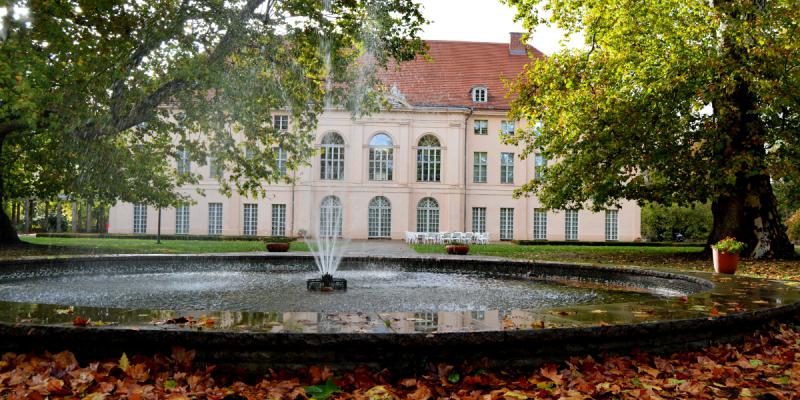
Behind the wall lies a 1950s garden section that has few parallels in Berlin. According to plans by Reinhold Lingner, a social terrace, a tea house, small garden rooms, and a flower bed whose color fields are reminiscent of Mondrian were created here; the ceramics are by Hedwig Bollhagen, and the garden furniture by Liv Falkenberg. The fountain rises six meters high and is colorfully illuminated, the rose garden has been restored, and Walter Arnold’s sculpture “Winterling” has stood in the garden since 1950. After 1945, this area served as the official residence of Wilhelm Pieck and later as a guesthouse for the GDR government; a museum has been established in the palace itself since 2009. Admission to the garden is free. Tripods and flashes are expressly permitted for private outdoor photography, but drones are prohibited, as are barbecuing and open fires. Those wishing to cross the Panke should be aware that Palace Park Bridge III is expected to be closed until the end of April 2027. Cycling is only permitted on the paved path in front of the palace.

Top10 Redaktion
Erfahrungsbericht vom 20.10.2026
Admission
Palace Garden and Park free
Palace Garden Opening Hours
April to October 05:00 to 20:30, November to March 05:00 to 19:00
Schönhausen Palace
Single ticket 8 Euro, reduced 6 Euro, family ticket 16 Euro
Public Transport
Bus 150 and 250 to Ossietzkyplatz, Tram M1 as well as Bus 107, 150 and 250 to Hermann-Hesse-Straße
Parking
Limited parking at the palace
Photo Rules
Private outdoor photography including tripod and flash allowed, commercial shootings only with written consent
Prohibited
Drones, barbecuing and open fires, fine up to 5,000 Euro
Current Status
Palace Park Bridge III over the Panke closed until expected end of April 2027, water lily pond under maintenance
Opening Hours
- Monday: 05:00–20:30
- Tuesday: 05:00–20:30
- Wednesday: 05:00–20:30
- Thursday: 05:00–20:30
- Friday: 05:00–20:30
- Saturday: 05:00–20:30
- Sunday: 05:00–20:30
Address
Tschaikowskistraße 1, 13156 Berlin, Deutschland
https://www.berlin.de/tourismus/parks-und-gaerten/3559910-1740419-schlosspark-schoenhausen.html