Bösebrücke


On the evening of November 9, 1989, the Bösebrücke on Bornholmer Straße was the first border crossing to open, hours before other barriers went up elsewhere. The steel bridge, opened in 1916, still stands today, and at the eastern bridgehead, the Square of November 9, 1989, with metal reliefs and a section of the forefield wall, commemorates that night.
Bösebrücke on Bornholmer Straße: The First Open Border
The Bösebrücke spans the railway area on Bornholmer Straße in northern Berlin and connects Prenzlauer Berg to Wedding. Construction began in the summer of 1913, and it was opened during World War I on September 11, 1916. With a length of 138 meters, it is considered Berlin’s first riveted steel bridge and is listed as a historical monument. Until 1948, it was called Hindenburgbrücke; since then, it bears the name of the communist resistance fighter Wilhelm Böse, who was executed in 1944. From 1961 to 1990, the Bornholmer Straße border crossing was located at the eastern bridgehead. On the evening of November 9, 1989, about 1,000 people gathered here after Günter Schabowski announced the new travel regulations. Shortly before midnight, the head of the crossing, Lieutenant Colonel Harald Jäger, on his own authority and against orders, opened the barriers and suspended passport controls. It was the first crossing where GDR citizens could pass the border that evening.
Square of November 9, 1989: Memorial under Japanese Cherry Trees
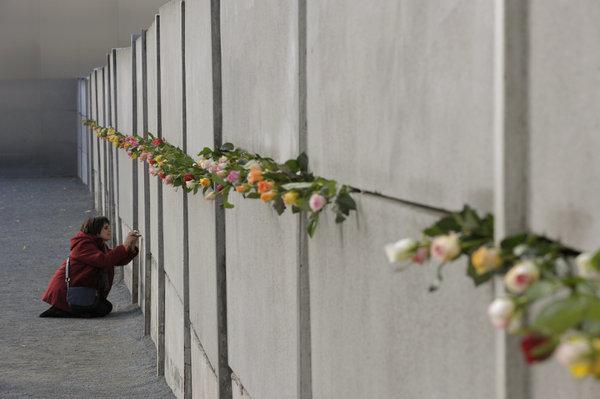
Since 2013, the square at the eastern bridgehead has officially been named the Square of November 9, 1989. The landscape architects from SINAI designed it to reflect the events of that night. Metal reliefs embedded in the ground tell the story of the day from the press conference to the forced opening, rusting steel bands mark the course of the border hinterland security wall, and a section of the forefield wall and the foundation of a watchtower have been preserved. A memorial stone made from an original wall segment has stood here since the first anniversary of the fall of the Wall and was moved to its current location in 2010. Under the bridge lies a split boulder as a thank you for a Japanese donation, which funded the planting of ornamental cherry trees along the former death strip after 1990. Eight of these trees stand in the square, commemorating the flowing crowds of people, and their blossoms usually appear from late April to mid-May. Three rotating information panels explain the history of the border complex, and on the Bösebrücke itself, a plaque commemorates Willy Brandt’s statement that Berlin would live and the Wall would fall.

Top10 Redaktion
Erfahrungsbericht vom 26.10.2026
Price level
Bridge and memorial site are publicly accessible and free of charge.
Public Transport
Bornholmer Straße S-Bahn station is located directly at the bridge.
Highlight
The metal reliefs embedded in the ground that tell the story of November 9, 1989.
Preserved remnants
A section of the forefield wall and the foundation of a former watchtower.
Information
Three rotating and illuminated information panels on the history of the border crossing.
Best time
The Japanese ornamental cherry trees in the square usually bloom between late April and mid-May.
Location
The memorial site is located at the eastern bridgehead on the Prenzlauer Berg side.
Opening Hours
- Monday: Open 24 hours
- Tuesday: Open 24 hours
- Wednesday: Open 24 hours
- Thursday: Open 24 hours
- Friday: Open 24 hours
- Saturday: Open 24 hours
- Sunday: Open 24 hours
Address
Bornholmer Straße 55, 10439 Berlin, Deutschland