Gethsemanekirche
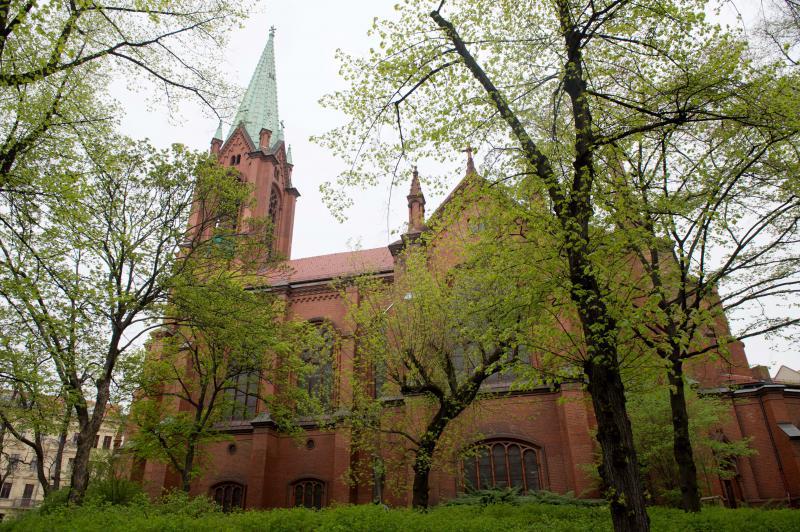
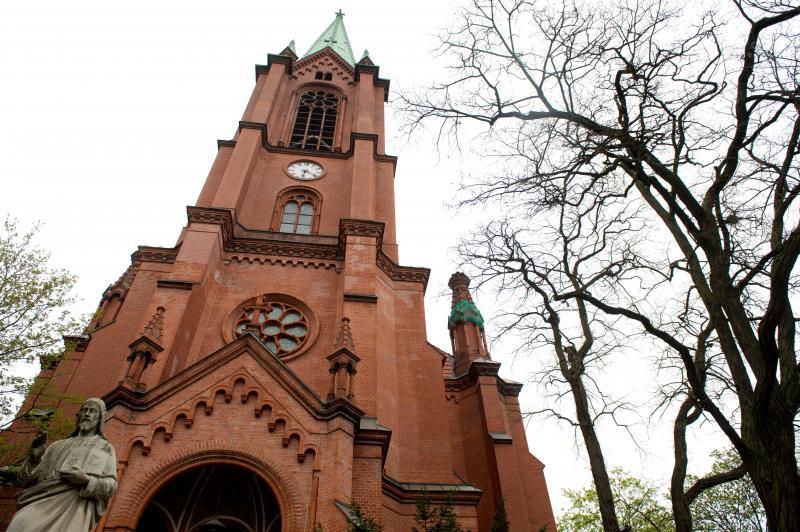
The Gethsemane Church on Stargarder Straße was consecrated in 1893 in the presence of the imperial couple and was the center of the East Berlin opposition movement in autumn 1989. Candles burned outside its gates, and thousands kept vigil inside under the motto 'Watch and pray.' This is where the Peaceful Revolution in Berlin began.
Gethsemane Church in Prenzlauer Berg: Brick Building with Imperial Visit
The Gethsemane Church stands at the corner of Stargarder Straße and Greifenhagener Straße in Prenzlauer Berg, just a few minutes from Schönhauser Allee station and surrounded by the perimeter block development that Alfred Messel designed for working-class families opposite. It was built between 1891 and 1893 according to plans by Senior Building Councillor August Orth, who also constructed the Zionskirche. Empress Auguste Viktoria laid the foundation stone in March 1891, Emperor Wilhelm II personally chose the name, and the imperial couple also attended the inauguration in February 1893. The clinker brick building is a hall church with a four-story west tower and a steep octagonal spire, featuring a mix of Neo-Romanesque round-arch windows and a large rosette with Neo-Gothic ribbed vaulting and clustered pillars. Inside, white walls meet terracotta pillars. The organ from 1973 comes from the Jehmlich workshop in Dresden and has 25 registers with approximately 1,872 pipes.
Autumn 1989: Vigils, Arrests, and the Call for the Fall of the Wall
The church gained its significance for GDR history in autumn 1989 when it served as an information center and meeting point for the civil rights movement. From October 2, 1989, it remained open day and night; thousands participated in vigils under the motto ‘Watch and pray,’ and the forecourt was covered with candles. On October 7, the fortieth anniversary of the GDR’s founding, the People’s Police and State Security took action against demonstrators on Schönhauser Allee. Many fled into the church; over 1,000 people were arrested and some held for weeks. A few days later, around 3,000 opposition members gathered in the nave while the police besieged the building. On November 5, 1989, during a concert, the call rang out that the Wall had to go. These weeks are commemorated today by Karl Biedermann’s 1990 bas-relief ‘Widerstand’ (Resistance) and a copy of Ernst Barlach’s bronze ‘Der Geistkämpfer’ (The Fighter of the Spirit), which the State of Berlin had installed in 1994. The Gethsemane Church also houses the wooden sculpture ‘Betender Jesus’ (Praying Jesus) from the Church of Reconciliation, which was demolished in the border strip.

Top10 Redaktion
Erfahrungsbericht vom 26.10.2026
Price Level
Admission to the church is free.
Access
Before visiting, it is advisable to call 030 4457745, as the church is not continuously accessible.
Public Transport
U2, S8, S41, S42, and S85 to Schönhauser Allee, plus tram lines M1 and 12.
Highlight
The octagonal interior with star vaulting, white walls, and terracotta pillars.
Art On Site
Karl Biedermann's bas-relief 'Widerstand' (Resistance) and a copy of Barlach's 'Geistkämpfer' (Fighter of the Spirit).
Architecture
Neo-Gothic hall church made of clinker brick according to August Orth's plans, inaugurated in 1893.
Organ
Jehmlich organ from 1973 with 25 registers and approximately 1,872 pipes.
Opening Hours
- Wed + Thu: 17:00 – 19:00
- Sun: Service from 11:00