The perfect Berlin experience:
Gift the Top10 Experience Box now!
Top10 Berlin

The best GDR history sites in Berlin 2026

50 Locations

The GDR shaped East Berlin for four decades, and its traces are everywhere in the city today. From the DDR Museum to the Stasi headquarters and Karl-Marx-Allee, gdr history can be explored at museums, memorials and preserved landmarks.

This overview gathers Berlin locations tied to the gdr, from museums and documentation centres to socialist architecture and monuments. Some focus on politics and surveillance, others on everyday life in East Germany.

Browse the places below to explore gdr history in Berlin 2026, compare exhibitions and opening hours, and plan your visit.

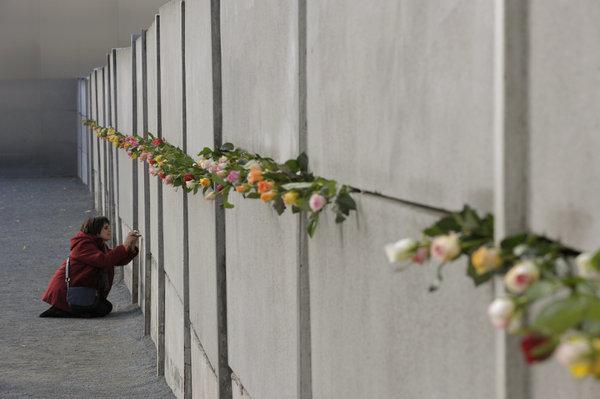
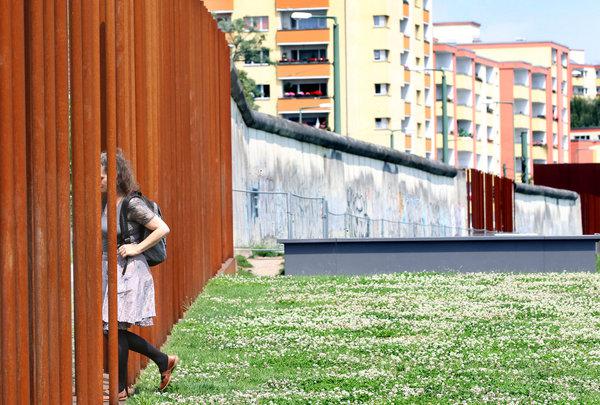
On Bernauer Strasse, the border ran straight through a row of houses, from whose windows people jumped into West Berlin. Today, the Berlin Wall Memorial stretches over 4.4 hectares and 1.4 kilometers, featuring the only section of border fortifications preserved in full depth. The Window of Remembrance names the 132 civilian victims.

See more
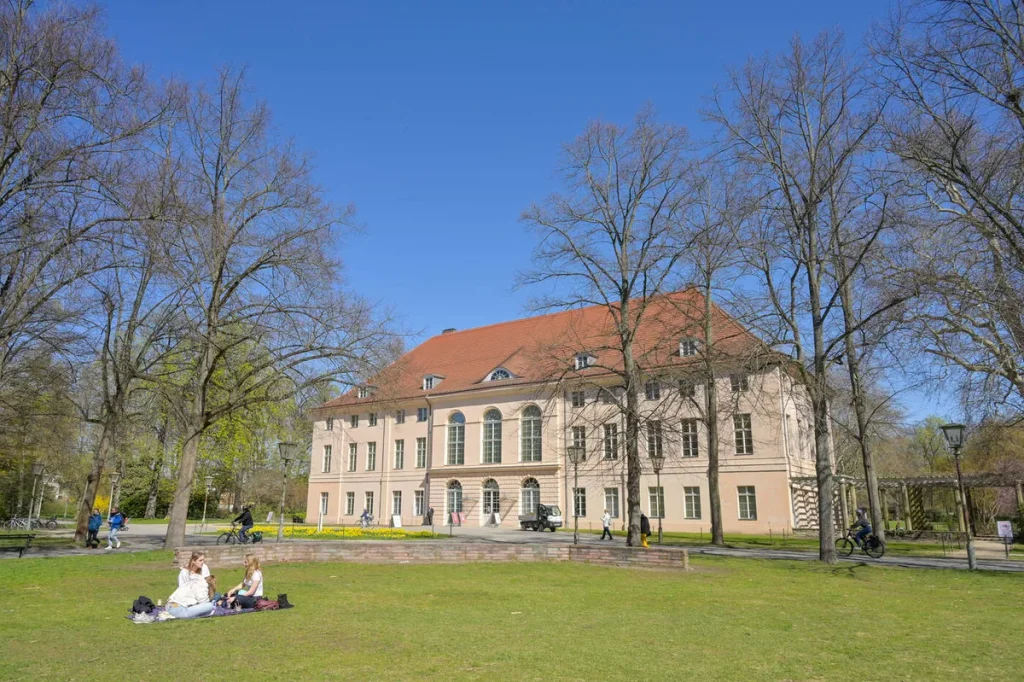
Foto: Gedenkstätte Hohenschönhausen

The Hohenschönhausen Memorial is located in Lichtenberg behind a four-meter-high wall and served as the central remand prison for the State Security from 1951 to 1990. Approximately 10,000 people were incarcerated here. Today, eyewitnesses who were themselves imprisoned lead visitors through the cells and interrogation rooms, making the GDR dictatorship immediately comprehensible.

See more
Our rating
4.9

At Friedrichstraße station, the Tränenpalast (Palace of Tears) stands as the former departure hall of the border crossing point, built in 1962 directly after the construction of the Berlin Wall. Spanning 550 square meters, the permanent exhibition showcases over 550 objects, including an original passport control booth. For German-German history in Berlin, this is the ultimate place of farewells.

See more
Our rating
4.8

The Stasi Museum is located in House 1 of the former Stasi headquarters on Normannenstraße in Lichtenberg, where up to 7,000 people worked at times. Minister Erich Mielke's offices have been preserved in their original condition, along with hidden cameras, microphones, and disguised IDs. Anyone who wants to experience the GDR up close will find themselves in the workroom of the State Security here.

See more
Our rating
4.8

The Deutschlandmuseum on Leipziger Platz stands on the former death strip and leads visitors through 2,000 years of German history in twelve walk-through rooms. The years of German division form one of these epochs, featuring the Berlin Wall and the last bread of the GDR. Those who wish to place the GDR in a broader context will find the appropriate setting here.

See more
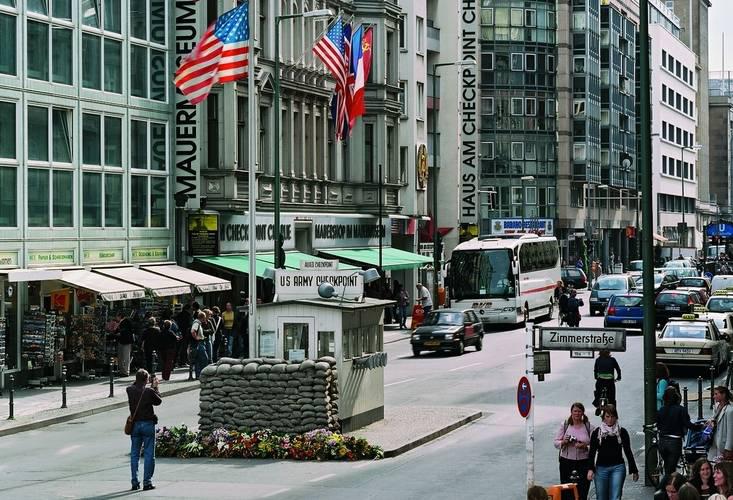
Where American and Soviet tanks faced each other in 1961, stands the Wall Museum at Checkpoint Charlie, founded in 1963 by Rainer Hildebrandt. On approximately 2,000 square meters, you'll find escape cars, hollowed-out surfboards, a hot air balloon, and a self-built mini-submarine. Hardly any Berlin Wall site displays so many original escape objects.

See more
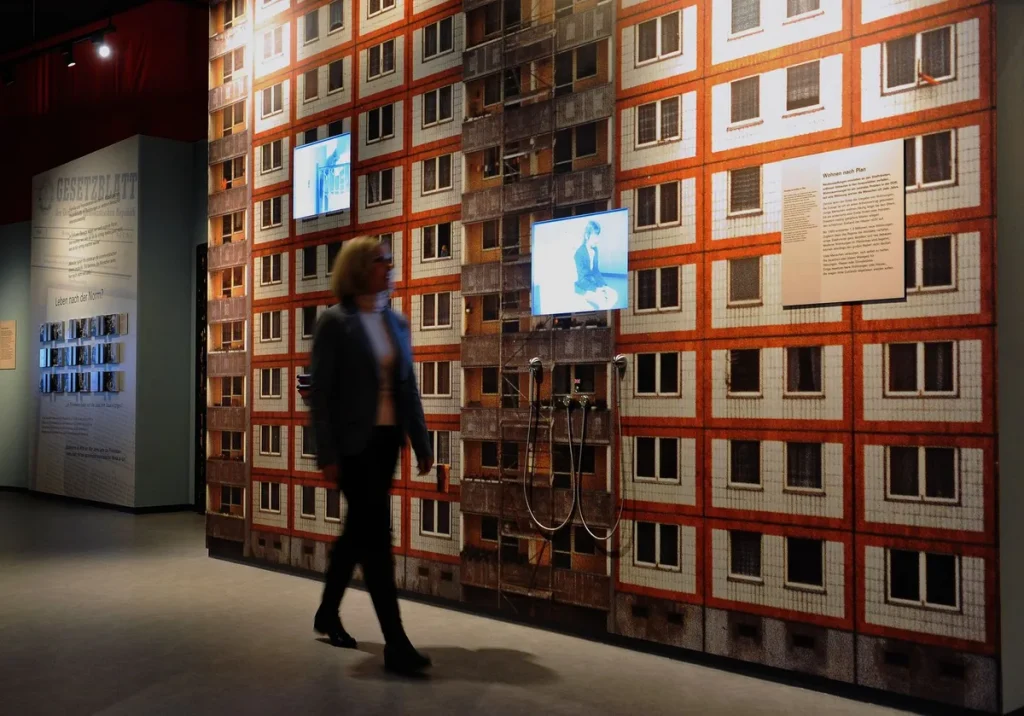
The WBS 70 Museum Apartment is located on the ground floor of an occupied prefabricated building on Hellersdorfer Straße, showcasing a complete GDR apartment from 1986 across 61 square meters. Wall unit, color TV, and even the salt shaker are still in place. A Hellersdorf resident, who knows the prefab building from personal experience, guides visitors through the three rooms.

See more
Our rating
4.7

With the Trabi Safari in Mitte, you don't sit in the back of a tour bus, but rather at the wheel of a two-stroke vehicle yourself. Around a hundred Trabis are ready on Zimmerstraße, driven in a convoy of up to six cars, with the guide commenting via radio. For Ostalgie in Berlin, this is the version with a clutch, four-speed gearshift, and the smell of a two-stroke engine.
See more
Außenbereich eines Restaurants mit Tischen, Schirmen vor rotem Backsteingebäude, Hackesche Höfe, Berlin.
Hackesche Höfe: Prachtvolle Jugendstil-Fassaden im belebten Innenhof mit Café und „CHAMÄLEON“ Schriftzug.
Detailansicht der Hackeschen Höfe: weiße Backsteinfassade mit blauen Dekorationen, Bogenfenstern und gemusterten Paneelen.
Our rating
4.7

With eight courtyards spanning 27,000 square meters, the Hackesche Höfe in Berlin-Mitte is Germany's largest enclosed courtyard complex. Opened in 1906, it became public property after the war and fell into disrepair until it was renovated in the 1990s for 80 million Deutschmarks. German-German history is revealed here as a sequence of decay and reconstruction.

See more

The Mauermuseum (Wall Museum) at Checkpoint Charlie stands directly at the former Allied control point on Friedrichstraße and has been collecting stories of escape from the GDR since 1963. On display are real escape vehicles, including a BMW Isetta, a mini-submarine, and a hot air balloon. 45 exhibition areas, including its own cinema, are spread across three levels.

See more
Our rating
4.6

Between Ostbahnhof and Oberbaumbrücke, the East Side Gallery stands as the longest preserved section of the Berlin Wall: 1.3 kilometers painted by 118 artists from 21 countries in the spring of 1990. Berlin has included the gallery in its list of monuments since November 1991. Among the Berlin Wall sites, it is the most colorful.

See more
Abendansicht des Kino International mit seiner strukturierten Fassade, leuchtenden Fenstern und angezeigten Filmtiteln.
Kino International in Berlin bei Dämmerung, beleuchtete Architektur mit großen Fenstern, dekorativer Seitenwand und Lichtern.
Our rating
4.6

The Kino International on Karl-Marx-Allee was the premiere cinema of the DEFA and has been back in operation since February 2026 after a renovation costing around 15 million Euros. The floating foyer bar from 1963, the concrete relief on the side walls, and the panoramic bar have remained. For Ostalgie in Berlin, this is the place with the greatest contrast between concrete and glamour.

See more
Our rating
4.6

The Berlin Wall Trail is Berlin's most famous cycling tour: 160 kilometers on the former border strip, divided into 14 stages, all starting and ending at train stations. Over 40 information stations along the way tell the story of the division. It is not a fully developed cycle path; the surface alternates between asphalt, cobblestones, and forest floor.

See more
Schloss Schönhausen in Berlin-Niederschönhausen von der Gartenseite.

In Pankow, Schönhausen Palace is a Baroque building where Prussian and GDR history immediately follow each other. First the summer residence of Queen Elisabeth Christine, it served as Wilhelm Pieck's official residence from 1949 to 1960 and then as a guesthouse for the GDR government. In 1990, the Two Plus Four Talks on German reunification were prepared here.

See more
Interaktive Kalter Krieg Ausstellung im The Wall Museum East Side Gallery mit Großbildern, Videos und Sitzgelegenheiten.
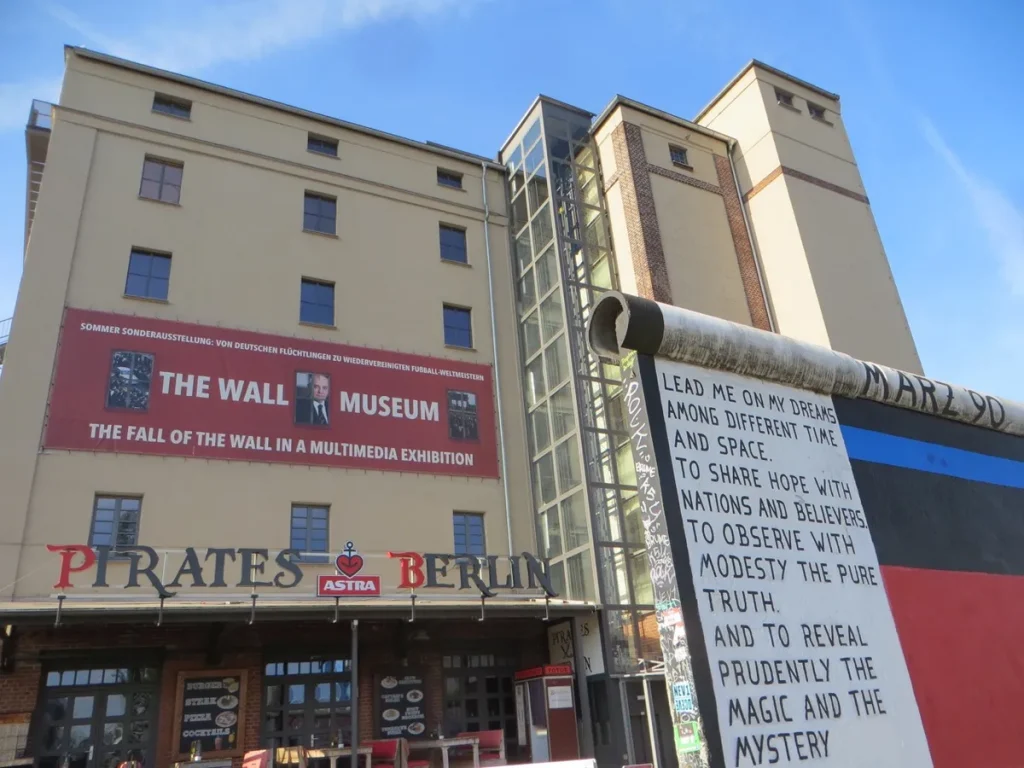
**The Wall Museum East Side Gallery, Berlin: Fassade mit rotem Banner und bemaltem Mauersegment mit englischem Text.**
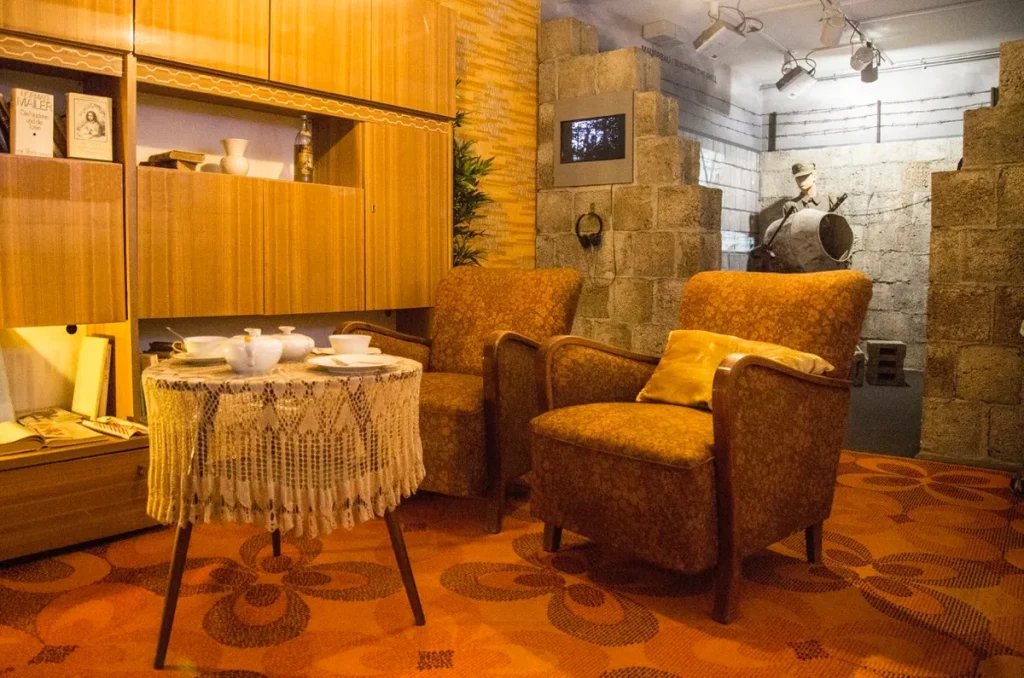
Kontrast The Wall Museum East Side Gallery: Gemütliches DDR-Zuhause und bedrohliche Berliner Mauer Installation.
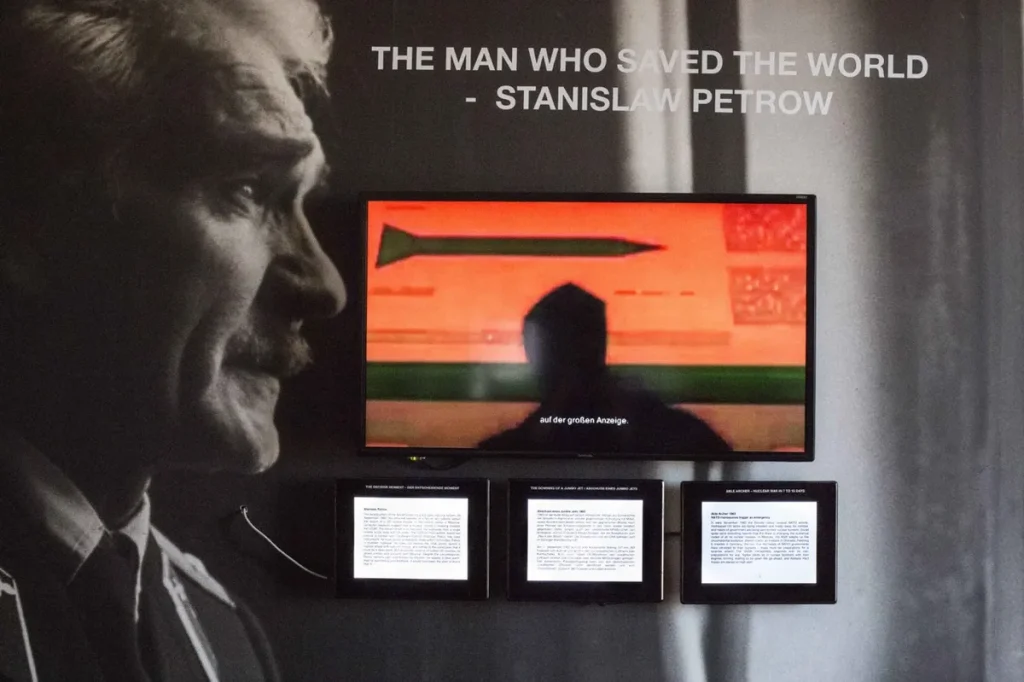
Ausstellung in The Wall Museum East Side Gallery: Stanislaw Petrow-Porträt, Bildschirm mit Rakete, Info-Texte zur Rettung der Welt.
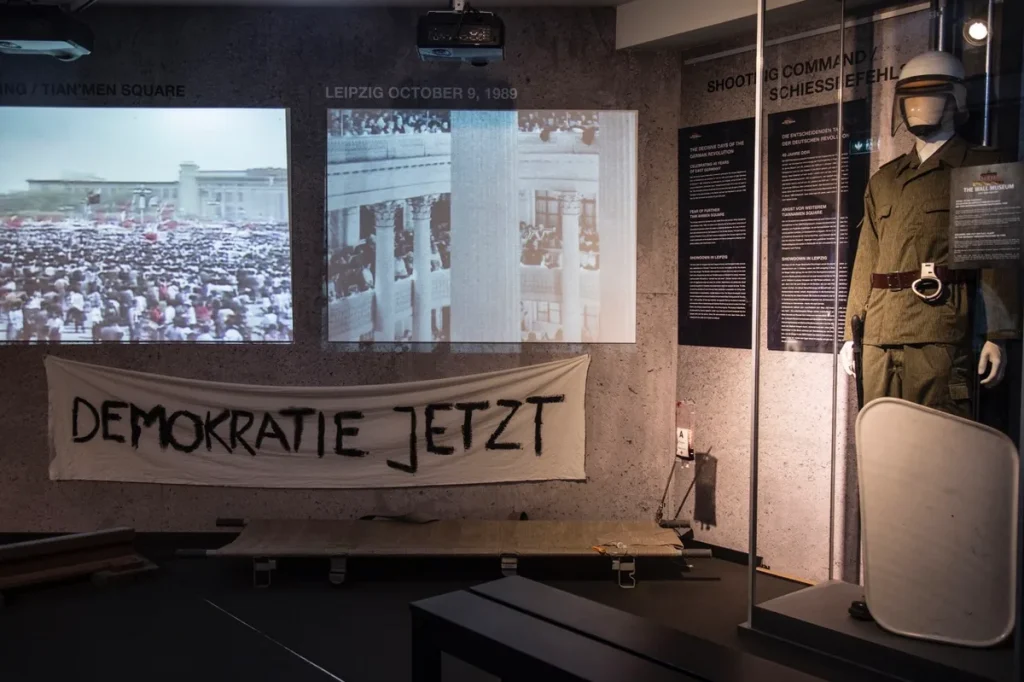
Ausstellung The Wall Museum East Side Gallery: Uniform, “Demokratie Jetzt” Banner, Projektionen von Leipzig & Tiananmen Protesten.

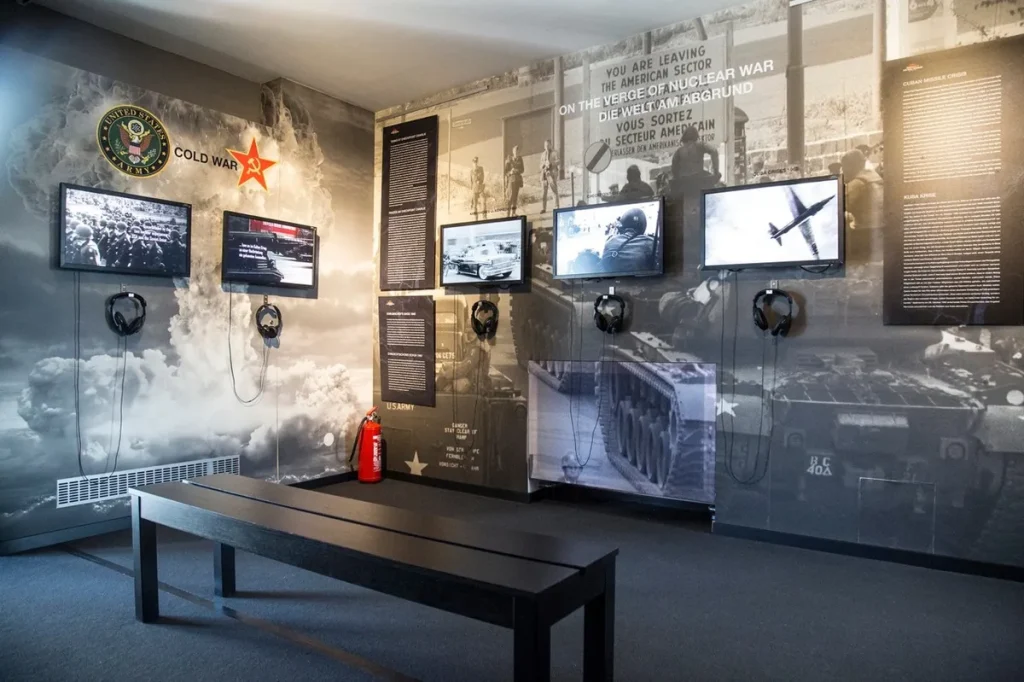
The Wall Museum East Side Gallery is located in the old mill granary at the Oberbaum Bridge, i.e., in the former death strip. In 13 rooms, over 100 screens, original wall segments, and interviews with contemporary witnesses recount the years from 1945 to 1990. Those looking for 'Ostalgie' in Berlin will find a counter-narrative here: the GDR from the perspective of those who wanted to leave.

See more