Hackesche Höfe
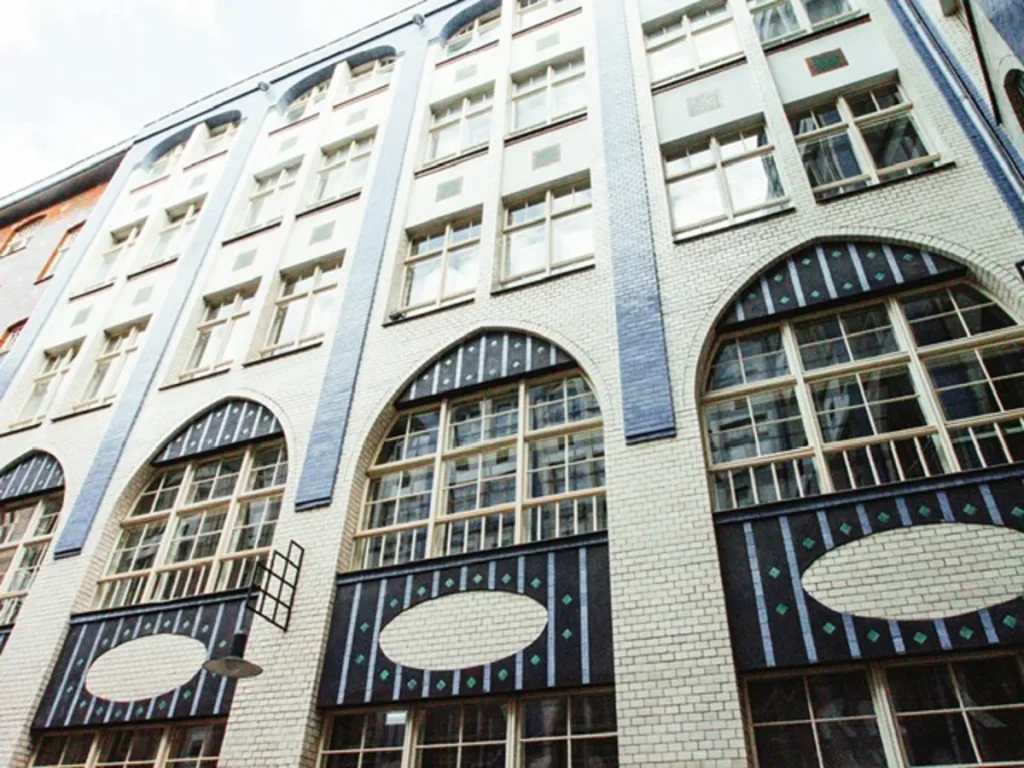
With eight courtyards spanning 27,000 square meters, the Hackesche Höfe in Berlin-Mitte is Germany's largest enclosed courtyard complex. Opened in 1906, it became public property after the war and fell into disrepair until it was renovated in the 1990s for 80 million Deutschmarks. German-German history is revealed here as a sequence of decay and reconstruction.
Hackesche Höfe in Berlin-Mitte: Art Nouveau Ensemble with GDR Past
The Hackesche Höfe in Berlin-Mitte is Germany’s largest enclosed courtyard complex and shows how one place survived the German Empire, National Socialism, everyday life in the GDR, and reunification within a single ensemble. Stepping through the archway on Rosenthaler Straße literally takes you through several chapters of German history at once. Opened in September 1906, architect Kurt Berndt designed the courtyard complex entirely in the spirit of the reform movement. During the Weimar Republic, the courtyards were a center of Jewish life and intellectual circles.
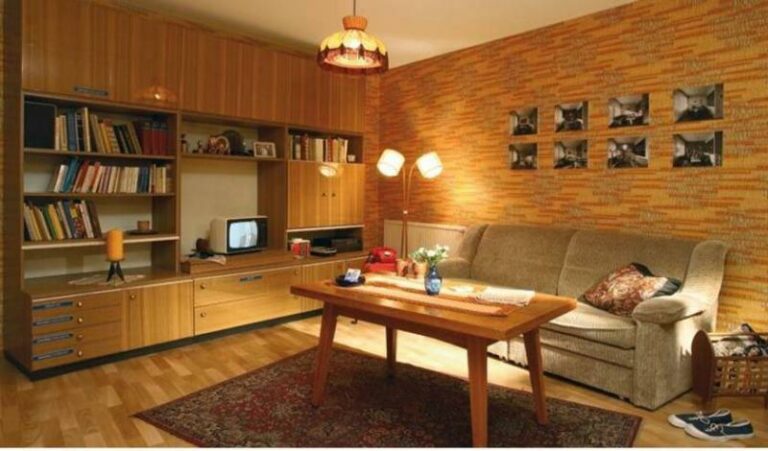
After World War II, the Hackesche Höfe became GDR public property: a Trabant workshop moved in, the GDR television ballet rehearsed in the former ballrooms, and the area increasingly fell into disrepair. In 1951, the owner was expropriated, the ensemble became public property and was not maintained for decades. Today, historical information panels in the passageways commemorate this period, and a closer look immediately reveals how profound this decay must have been.
Rebirth after the Fall of the Wall: German-German History You Can Touch
After the fall of the Wall, rebirth followed. Cultural and artistic creators, in particular, discovered the place for themselves before the entire area was extensively renovated in the mid-1990s. The restoration was carried out in 1993, with costs amounting to 80 million Deutschmarks. This made the Hackesche Höfe one of the most symbolic places of Berlin’s reunification.
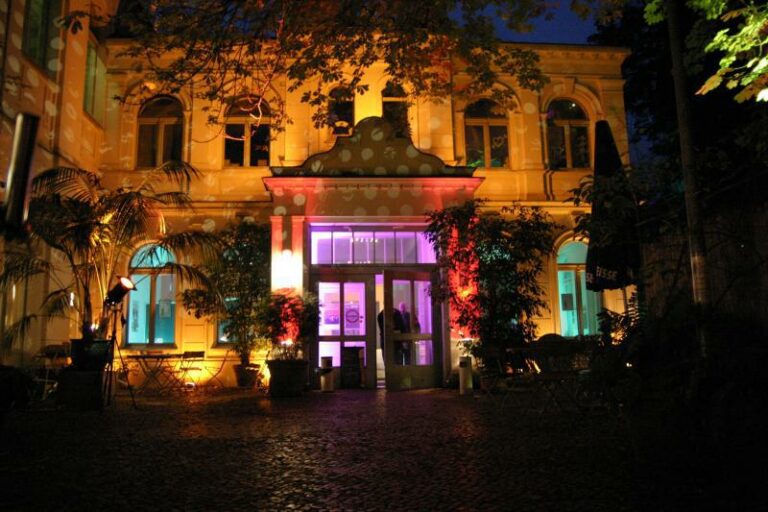
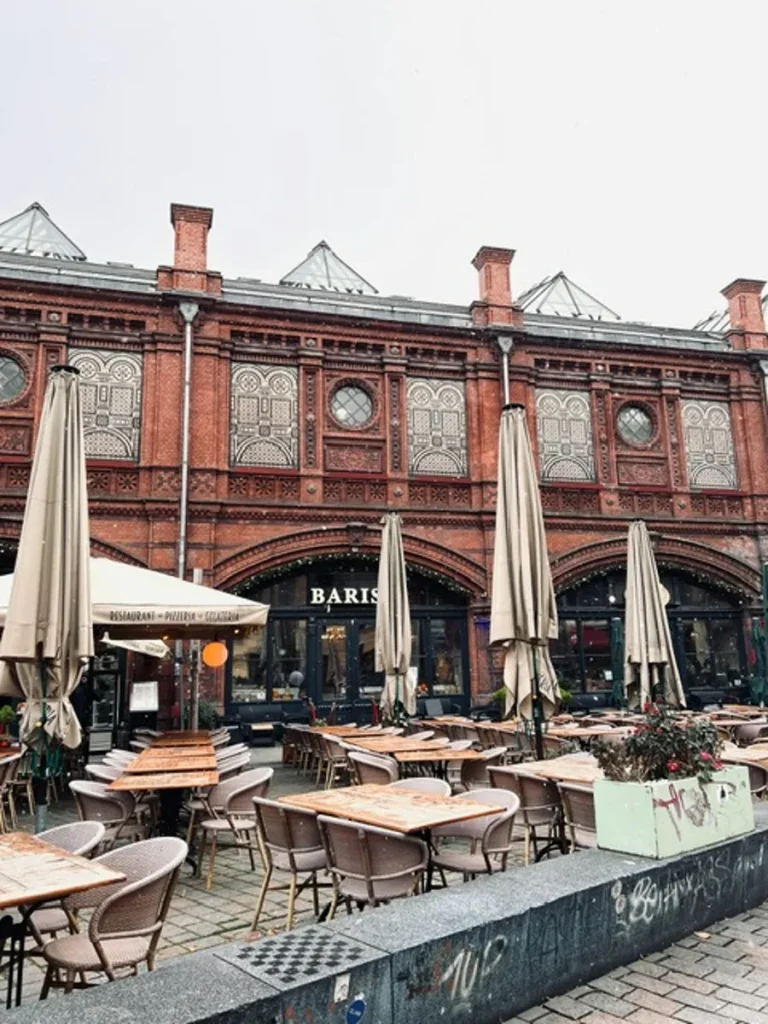
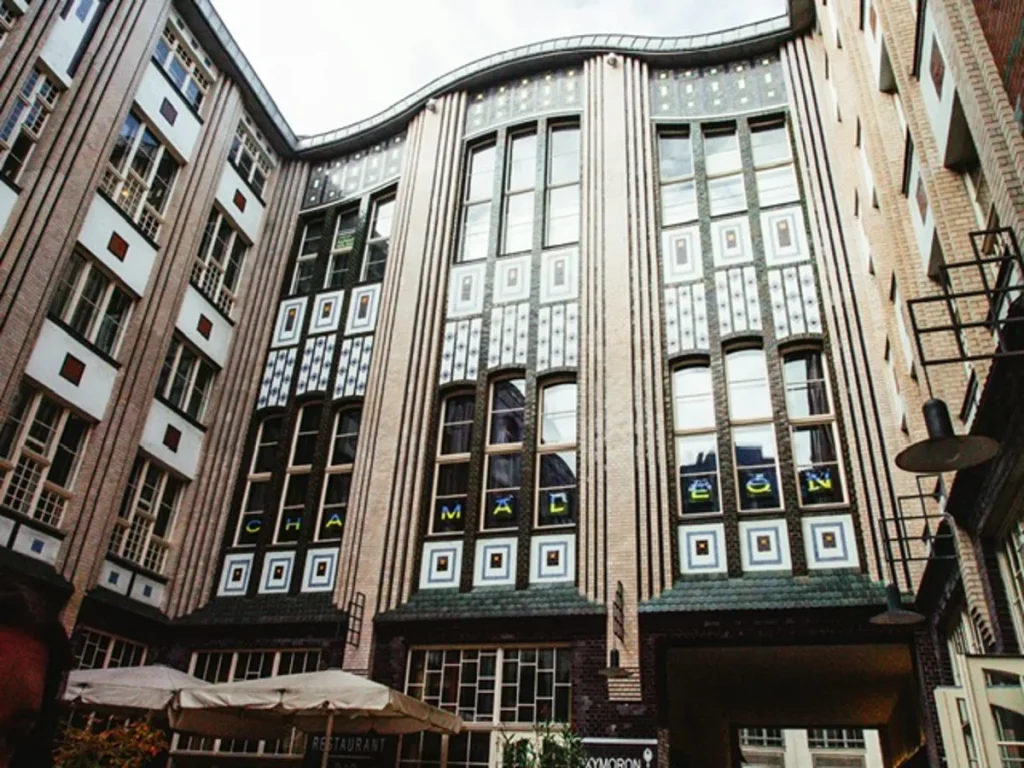
Today, the eight courtyards, spanning 27,000 square meters, house around 40 businesses. Besides the well-known Chamäleon Theater and the Hackesche Höfe Cinema, small manufactures, galleries, boutiques, and restaurants shape the atmosphere. Those who want to understand the history of the area best do so on foot, from the representative first courtyard with its colorful glazed Art Nouveau facade to the quieter back courtyards. Only this walk through all eight courtyards reveals how differently the individual building sections were used and how much of the original substance has been preserved.

Top10 Redaktion
Erfahrungsbericht vom 26.10.2026
Price Level
The courtyards are freely accessible; no entrance fee is charged.
Public Transport
S Hackescher Markt with S3, S5, S7 and S9, U8 to Weinmeisterstraße, Tram M1, M4, M5 and M6, Bus 384.
Parking
No dedicated parking garage or parking lot. Arrival by public transport is recommended.
Highlight
Eight interconnected courtyards spanning 27,000 square meters, including the front courtyard with August Endell's Art Nouveau facades.
Heritage Protection
The entire ensemble has been a protected monument since 1977.
Current Notice
Roof and facade are being renovated. The entrance building is scaffolded; the sidewalk and first courtyard are of limited use.
Accessibility
The courtyards themselves are accessible, but some individual shops and cultural venues can only be reached via steps.
Opening Hours
- Monday: 09:00–22:00
- Tuesday: 09:00–22:00
- Wednesday: 09:00–22:00
- Thursday: 09:00–22:00
- Friday: 09:00–22:00
- Saturday: 09:00–22:00
- Sunday: 09:00–22:00
Address
Rosenthaler Strasse 40, 10178 Berlin
https://www.hackesche-hoefe.de/?utm_source=local&utm_medium=organic&utm_campaign=gmb