Museum Berlin-Karlshorst
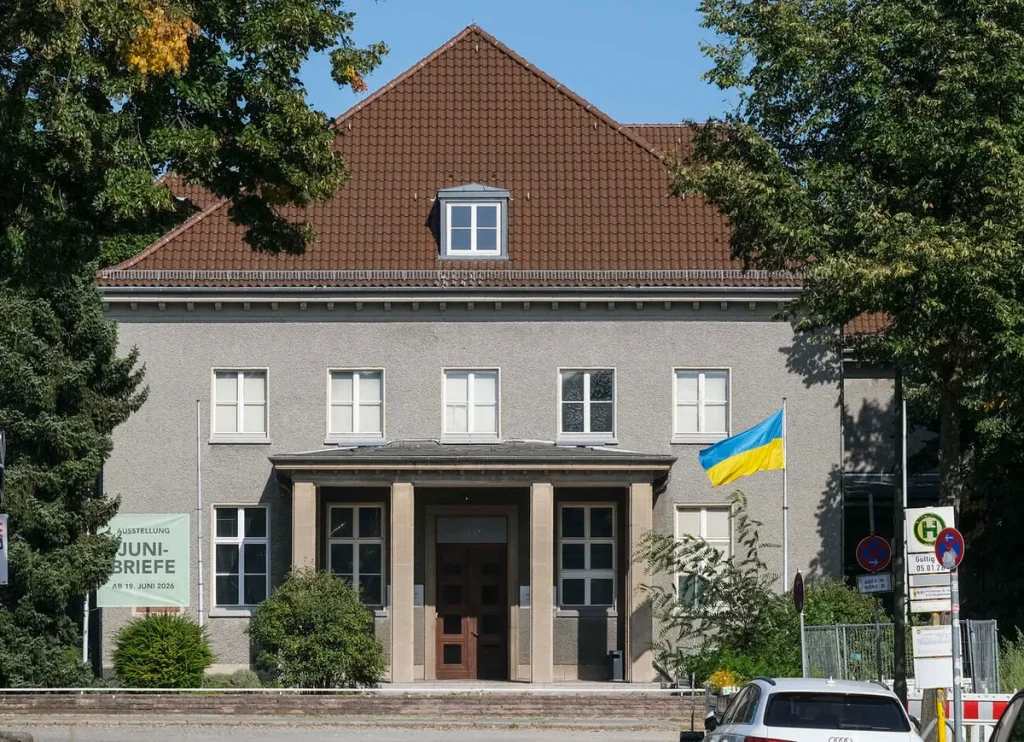
In Lichtenberg stands a building that doesn't just display history, but *is* history: At the Berlin-Karlshorst Museum, the Wehrmacht signed its unconditional surrender on the night of May 9, 1945. Until 1949, the Soviet Military Administration was based here, and the permanent exhibition shows the war from both German and Soviet perspectives.
Museum Berlin-Karlshorst: Where World War II Ended
The Berlin-Karlshorst Museum stands on the historical site where the commanders-in-chief of the Army, Navy, and Air Force signed the unconditional surrender of the Wehrmacht on the night of May 8-9, 1945, in the presence of representatives from the Soviet Union, the USA, Great Britain, and France. The building was constructed in the late 1930s as an officers’ mess for Pioneer School I, and in the final days of the war, the Red Army used it as its command staff. The Surrender Hall is preserved in its original state and remains the centerpiece of the building to this day.
From 1945 to 1949, the head of the Soviet Military Administration in Germany, the supreme power in the Soviet Occupation Zone, resided here. Thus, not only did the war end at this location, but the prehistory of Germany’s division also began here. On the ground floor, a memorial room preserved in its 1967 state and the diorama „Storming the Reichstag” illustrate how differently the memory of this date evolved in East and West.
Permanent Exhibition and Outdoor Area of the Museum in Karlshorst
The permanent exhibition „Germany and the Soviet Union in World War II” is spread across the ground and upper floors and is divided into ten chapters, ranging from German-Russian relations starting in 1914 to the consequences of war and memory. It consistently tells the story of the war from both perspectives, German and Soviet, which distinguishes it from most other history museums in the city.
In the museum garden, large-format weapon and tank ensembles from the period of Soviet use are displayed, along with the open-air exhibition „The German Surrender in May 1945″. The building itself was founded by Soviet troops as a surrender museum in 1967 and re-established after their withdrawal: the sponsoring association was founded in 1994, and on May 10, 1995, the museum opened to the public. The inscription „German-Russian Museum” was removed from the building on February 24, 2022.

Top10 Redaktion
Erfahrungsbericht vom 26.10.2026
Price Level
Admission to all exhibitions is free. The audio guide costs 3 Euros, 1 Euro reduced.
Public Transport
S3 to S Karlshorst, then Bus 296 to Museum Karlshorst. Alternatively, U5 to Tierpark and also Bus 296.
Highlight
The Surrender Hall, preserved in its original state, and the outdoor area with large-format Soviet military technology.
Guided Tours
The public museum tour costs 8 Euros, 2 Euros reduced, and is free for those under 18. The district tour „Secret Karlshorst" through the former Soviet restricted area also costs 8 Euros.
Audio Guide
Available in German, English, Russian, Ukrainian, Belarusian, French, and Polish.
Accessibility
All floors are accessible via elevator and ramps; wheelchairs can be borrowed on site. Information is available in German Sign Language and Easy Language.
Sponsorship
The museum is supported by an association with members from Germany, Russia, Belarus, and Ukraine, and is fully financed by federal funds.
Opening Hours
- Monday: Closed
- Tuesday: 10:00–18:00
- Wednesday: 10:00–18:00
- Thursday: 10:00–18:00
- Friday: 10:00–18:00
- Saturday: 10:00–18:00
- Sunday: 10:00–18:00