
The puzzle tour starts in Weinbergspark at Rosenthaler Platz and ends after eleven stations at the Berlin Wall Memorial. It tells the story of the escape attempt of the GDR art dealer Siegfried Kath, and was developed with a historian and a history teacher. As a school trip activity in Berlin, it takes two hours and one smartphone per team.
gdr
-

-

On Bernauer Strasse, the border ran straight through a row of houses, from whose windows people jumped into West Berlin. Today, the Berlin Wall Memorial stretches over 4.4 hectares and 1.4 kilometers, featuring the only section of border fortifications preserved in full depth. The Window of Remembrance names the 132 civilian victims.
-

The Hohenschönhausen Memorial is located in Lichtenberg behind a four-meter-high wall and served as the central remand prison for the State Security from 1951 to 1990. Approximately 10,000 people were incarcerated here. Today, eyewitnesses who were themselves imprisoned lead visitors through the cells and interrogation rooms, making the GDR dictatorship immediately comprehensible.
-

At Friedrichstraße station, the Tränenpalast (Palace of Tears) stands as the former departure hall of the border crossing point, built in 1962 directly after the construction of the Berlin Wall. Spanning 550 square meters, the permanent exhibition showcases over 550 objects, including an original passport control booth. For German-German history in Berlin, this is the ultimate place of farewells.
-

The Stasi Museum is located in House 1 of the former Stasi headquarters on Normannenstraße in Lichtenberg, where up to 7,000 people worked at times. Minister Erich Mielke's offices have been preserved in their original condition, along with hidden cameras, microphones, and disguised IDs. Anyone who wants to experience the GDR up close will find themselves in the workroom of the State Security here.
-
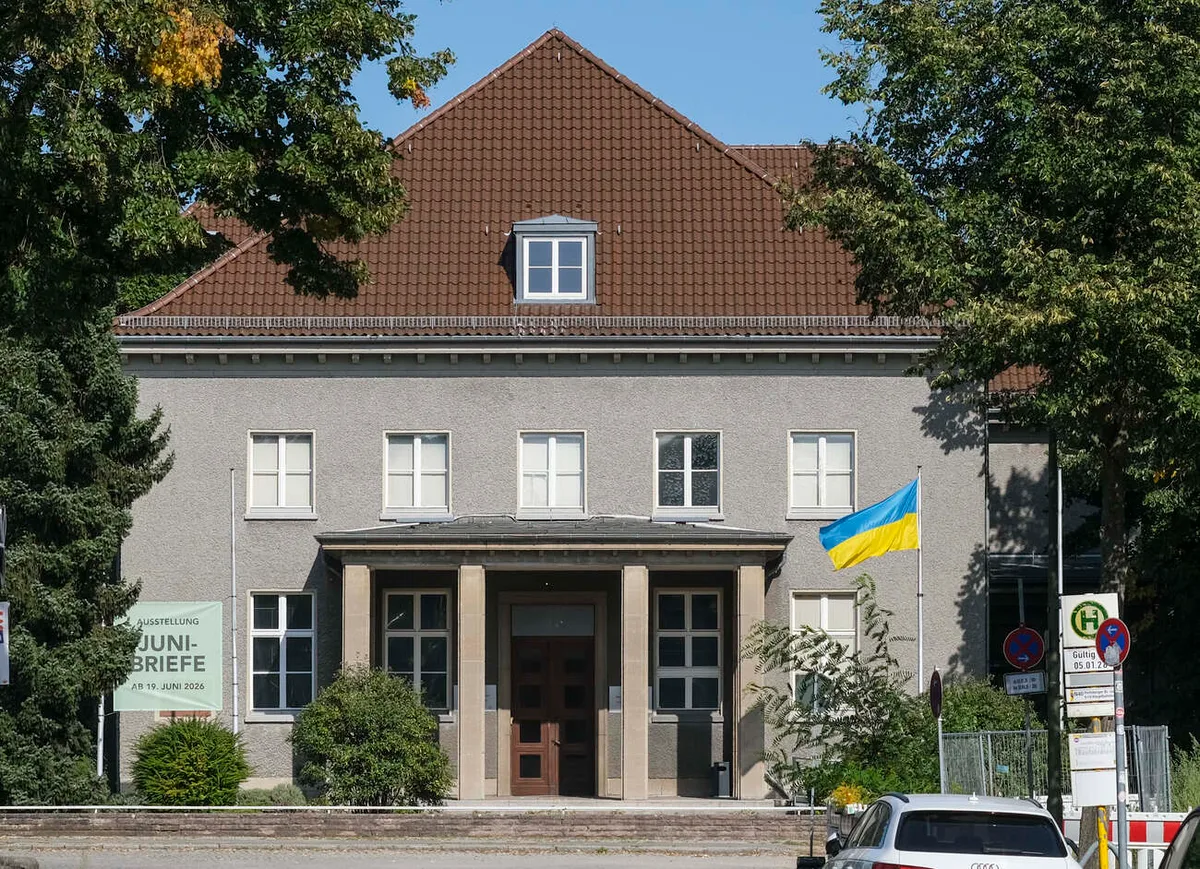
In Lichtenberg stands a building that doesn't just display history, but *is* history: At the Berlin-Karlshorst Museum, the Wehrmacht signed its unconditional surrender on the night of May 9, 1945. Until 1949, the Soviet Military Administration was based here, and the permanent exhibition shows the war from both German and Soviet perspectives.
-

The Deutschlandmuseum on Leipziger Platz stands on the former death strip and leads visitors through 2,000 years of German history in twelve walk-through rooms. The years of German division form one of these epochs, featuring the Berlin Wall and the last bread of the GDR. Those who wish to place the GDR in a broader context will find the appropriate setting here.
-

The WBS 70 Museum Apartment is located on the ground floor of an occupied prefabricated building on Hellersdorfer Straße, showcasing a complete GDR apartment from 1986 across 61 square meters. Wall unit, color TV, and even the salt shaker are still in place. A Hellersdorf resident, who knows the prefab building from personal experience, guides visitors through the three rooms.
-

Where American and Soviet tanks faced each other in 1961, stands the Wall Museum at Checkpoint Charlie, founded in 1963 by Rainer Hildebrandt. On approximately 2,000 square meters, you'll find escape cars, hollowed-out surfboards, a hot air balloon, and a self-built mini-submarine. Hardly any Berlin Wall site displays so many original escape objects.
-

With the Trabi Safari in Mitte, you don't sit in the back of a tour bus, but rather at the wheel of a two-stroke vehicle yourself. Around a hundred Trabis are ready on Zimmerstraße, driven in a convoy of up to six cars, with the guide commenting via radio. For Ostalgie in Berlin, this is the version with a clutch, four-speed gearshift, and the smell of a two-stroke engine.