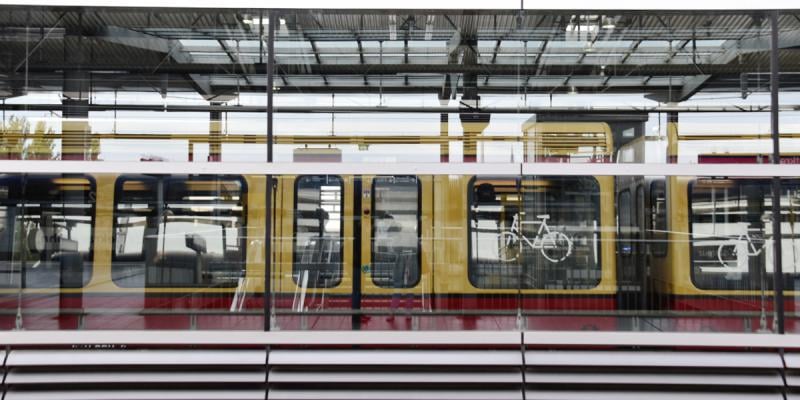
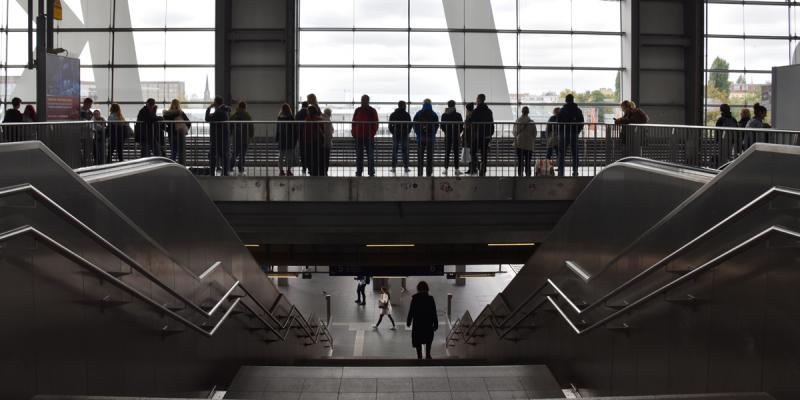
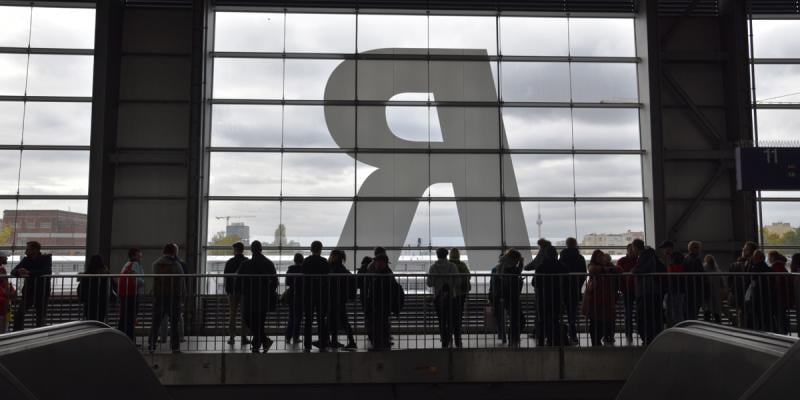
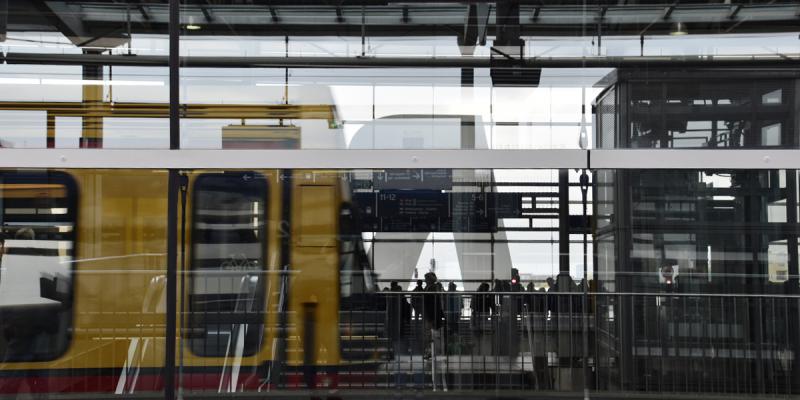
Ostkreuz S-Bahn station is one of Berlin's most unusual photo spots: here, the Ringbahn crosses the City and Ostbahn tracks on its own hall made of glass and steel. Additionally, there's the listed water tower from 1912 with violet glazed bricks. The station is freely accessible, but tripods are not allowed there.
The Ostkreuz S-Bahn Station as a Photo Spot Between Two Track Levels
As early as 1871, the Ringbahn, Schlesische Bahn, and Ostbahn crossed here. In 1882, the station began operations as Stralau-Rummelsburg, and since 1933, it has been called Ostkreuz. Today, it is the most frequently used interchange station of the Berlin railway, with around 250,000 travelers daily and over 1,500 train stops. The main motif is the crossing of two levels: the Ringbahn is above, the Stadtbahn and Ostbahn are below, and from the Ringbahn platform, you can look directly down onto the traffic below. This configuration arose during the reconstruction, which ran from 2006 to December 2018 during ongoing operations, cost around 411 million Euros, and introduced twelve elevators and 17 escalators; GBP Architekten were responsible. Since April 2012, the hangar-like Ringbahn hall made of glass and steel has spanned the lower tracks. The pedestrian bridge and the reception building are also new constructions, based on historical precedents. In addition to the S-Bahn lines, regional trains and the Airport Express also stop here.
Ostkreuz Photo Spot: Water Tower, Ringbahn Hall, and View of the Tracks
The second major motif stands immediately next to it on the railway premises. The water tower was built between 1909 and 1912 according to a design by Karl Cornelius for the Royal Railway Directorate Berlin. The shaft and dome are clad with violet glazed bricks, the spire is made of copper, and the dome shape references a Pickelhaube helmet. Inside, spiral iron stairs lead over seven galleries to the tank floor. Since January 1978, the tower has been on Berlin’s list of protected monuments; it was in operation until the mid-1980s and was renovated in 2006. Since 2015, it has been privately owned and not accessible from the inside, thus serving solely as an exterior motif. Also preserved are the rectifier plant on Markgrafendamm by Richard Brademann and the two civil servant residences from 1900 and 1910. Construction is currently ongoing around the northeastern forecourt towards Victoriakiez; lighting, benches, and tree plantings are still missing there. For photography within the station, the Deutsche Bahn’s house rules apply: tripods are prohibited, and commercial photo and film recordings require the approval of station management.

Top10 Redaktion
Erfahrungsbericht vom 20.10.2026
Admission
Free, the station is freely accessible
Access
The water tower is privately owned and not accessible from the inside
Public Transport
S3, S5, S7, S75, S8, S85, S41 and S42 as well as Bus M43, 194, 347 and N94, fare zone A
Regional Transport
RE1, RE2, RE7, RB12, RB14, RB25 and RB26 as well as the Airport Express to BER every 30 minutes
Photo Rules
Private photos allowed, tripods are prohibited according to house rules, commercial filming only with the approval of station management
Drones
Not allowed
Highlight
View from the Ringbahn platform in the glass hall down onto the tracks of the lower level
Current Status
The northeastern forecourt towards Victoriakiez is still a construction site
Opening Hours
Address
Sonntagstraße 37, 10245 Berlin, Deutschland