Regierungsviertel

Where the death strip once divided the city, today stands the power center of reunited Germany. The Berlin Government District in Mitte is not a museum district, but living history: the Reichstag, the 'Band des Bundes' (Federal Ribbon), and silent memorials tell stories of division, unity, and democracy in a confined space.
The Government District: Where German-German History Became Reality
Where the inner-German border once drew a deep furrow through the cityscape, today the Government District of reunited Germany stretches between Berlin Mitte and Tiergarten. Hardly any other place in Berlin condenses German-German history as directly as this one. Those who stroll here literally walk over the former death strip of the Berlin Wall. However, one has to look closely to recognize this: superficially, among the impressive architectural works, little today initially reminds one of the area’s bleak past as the former death strip.
The core of the district is the Reichstag building, home to the German Bundestag since 1999. The building tells the story of Germany’s division and its overcoming, tracing how the Reichstag building was constructed, destroyed, repaired, shrouded, and rebuilt as a parliamentary seat over time, finally to be revived in 1999 as the all-German parliamentary seat. Sir Norman Foster’s iconic glass dome can be ascended after free advance registration. The panoramic view over Berlin is a bonus and not the actual reason for the ascent.
Band des Bundes (Federal Ribbon) and Parliament of Trees
Also indispensable for anyone wanting to understand the history of German division is the so-called Band des Bundes (Federal Ribbon). It symbolizes reunification with three buildings: the Federal Chancellery, the Paul-Löbe-Haus, and the Marie-Elisabeth-Lüders-Haus are connected within it. The structure runs in a straight line across the eastern and western banks of the Spree, both banks once separated by the Wall.
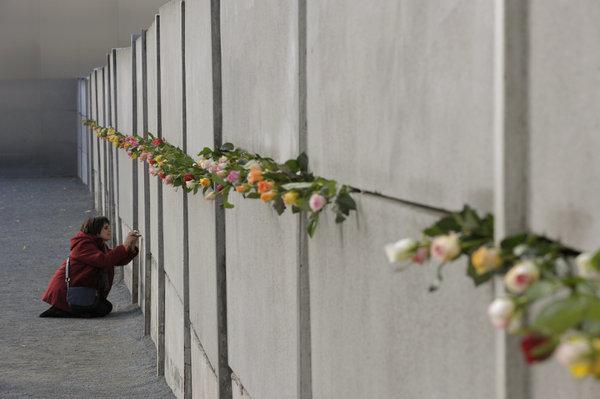
Those who walk a little further will come across one of Berlin’s most touching memorials, which few people know about. The “Parliament of Trees” is a living memorial against war and violence, developed by artist Ben Wagin in 1990. It commemorates the victims of the Berlin Wall and condemns all warlike violence. Wagin secured original Wall sections and planted trees in the former death strip as a reminder of peaceful coexistence. Granite slabs commemorate the 258 victims of the Wall, and original parts of the Berlin Wall surround the garden. Access to this memorial site is free, and its very silence makes it one of the most impressive places in the entire government district.

Top10 Redaktion
Erfahrungsbericht vom 26.10.2026
Price Level
Visiting the Reichstag dome is free, but requires prior registration with name and date of birth.
Public Transport
U5 to Bundestag, Bus 100 to Reichstag/Bundestag, S1, S2, S25 and S26 to Brandenburger Tor.
Highlight
Norman Foster's glass dome with two spiral ramps, each 230 meters long, and an observation platform at 40.7 meters.
Wall Memorial
Original segments of the inner wall stand in their original location in the Marie-Elisabeth-Lüders-Haus. Access is free, but temporarily closed due to construction work on the extension.
Accessibility
Step-free access via Entrance West C at Platz der Republik, accessible toilets on every floor, tactile model, and induction loops.
Audio Guide
Audio guide for the Reichstag dome in twelve languages, plus plain language, a children's version, and a video guide in sign language.
Opening Hours
- Monday: 10:15–16:00
- Tuesday: 10:15–16:00
- Wednesday: 10:15–16:00
- Thursday: 10:15–16:00
- Friday: 10:15–16:00
- Saturday: 10:00–16:00
- Sunday: 10:15–16:00