Hamburger Bahnhof - Nationalgalerie der Gegenwart
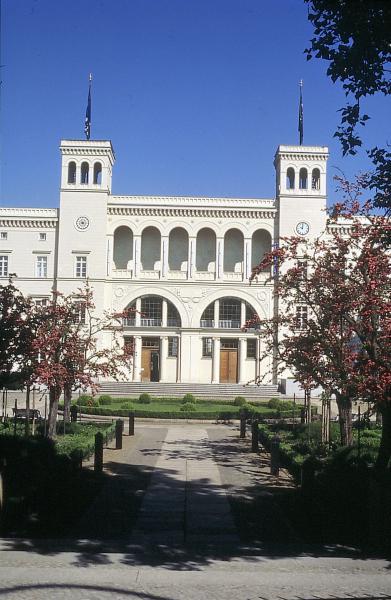
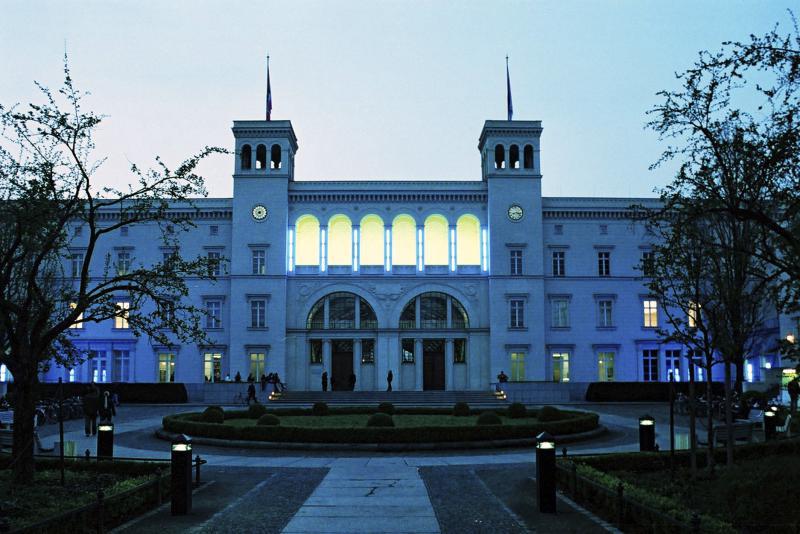
With over 10,000 square meters, the Hamburger Bahnhof is the largest venue of the Nationalgalerie and showcases art from 1960 to the present day. The building opened in 1846 as a terminal station for the line to Hamburg; train operations ceased as early as 1884. The Rieckhallen, saved by the State of Berlin, have been in use again since September 2024.
From a Terminal Station in 1846 to the Nationalgalerie’s Largest Venue
The Hamburger Bahnhof at Invalidenstraße 50 is the only museum on this list that began as a railway station. In December 1846, the terminal station for the line from Berlin to Hamburg opened here, with the late-classical reception building designed by Friedrich Neuhaus. Train operations ceased as early as 1884, after which the premises served for about two decades as apartments and administration, until their conversion into an exhibition house followed in 1904: From then on, it housed the Transport and Building Museum, the predecessor of today’s German Museum of Technology. Josef Paul Kleihues transformed the building into a museum for contemporary art, reopening on November 3, 1996. Today, with over 10,000 square meters of exhibition space, the Hamburger Bahnhof is the largest venue of the Nationalgalerie, larger than the Alte Nationalgalerie, Neue Nationalgalerie, Museum Berggruen, and Sammlung Scharf-Gerstenberg. The museum had initially started with 7,000 square meters. Around 445,000 people visited in 2025, a significant increase compared to previous years. The largest single donation received by the Nationalgalerie since the legacy of Joachim Heinrich Wilhelm Wagener in 1861 also went to this house.
Marx, Flick, Marzona: three collections and the saved Rieckhallen
The foundation was laid in 1996 by the Marx Collection, an indefinite loan focusing on Beuys, Kiefer, Rauschenberg, Twombly, and Warhol. From it come Robert Rauschenberg’s Pink Door from 1954, as well as Andy Warhol’s Double Elvis from 1963 and Mao from 1973, which serves as the museum’s emblem, plus Joseph Beuys’ Tram Stop from 1976. In 2004, the Friedrich Christian Flick Collection was added as a loan with over 1,500 works; the loan agreement ended in 2021, with 268 works being donated and belonging to the Nationalgalerie ever since. The Marzona Collection contributes over 600 works by approximately 150 artists, including Concept Art, Land Art, Minimal Art, and Arte Povera from 1965 to 1978. However, the most important news in recent years concerns the Rieckhallen: The State of Berlin purchased the approximately 3,000 square meter hall in 2022, in 2023, the building’s protected monument status was extended to it, and since September 6, 2024, exhibitions are once again being held there. However, access to the Rieckhallen is currently not barrier-free; assistance is available at the information desk at the ticket counter.

Top10 Redaktion
Erfahrungsbericht vom 30.10.2026
Superlative
Largest venue of the Nationalgalerie with over 10,000 square meters of exhibition space
Superlative
Around 445,000 visits in 2025
Superlative
Largest single donation to the Nationalgalerie since Wagener's legacy in 1861
History
Opened in December 1846 as the terminal station for the Hamburg to Berlin line, architect Friedrich Neuhaus
History
Train operations ceased in 1884, from 1904 Transport and Building Museum in the building
Museum conversion
Josef Paul Kleihues, reopening on November 3, 1996
Rieckhallen
Around 3,000 square meters, purchased by the State of Berlin in 2022, in use again since September 6, 2024
Monument Protection
Extended to the Rieckhallen in 2023
Collection
Art from 1960 to today: Marx Collection, 268 works from the Flick donations, over 600 works from the Marzona Collection
Key Works
Andy Warhol Mao from 1973, Robert Rauschenberg Pink Door from 1954, Joseph Beuys Tram Stop from 1976
Accessibility
Access to the Rieckhallen is currently not barrier-free; assistance is available at the information desk at the ticket counter
Public Transport
S-Bahn, U-Bahn, Tram and Bus to Hauptbahnhof (Central Station)
Opening Hours
- Monday: Closed
- Tuesday: 10:00–18:00
- Wednesday: 10:00–18:00
- Thursday: 10:00–20:00
- Friday: 10:00–18:00
- Saturday: 11:00–18:00
- Sunday: 11:00–18:00
Address
Invalidenstraße 50, 10557 Berlin, Deutschland
https://www.smb.museum/museen-einrichtungen/hamburger-bahnhof/home/