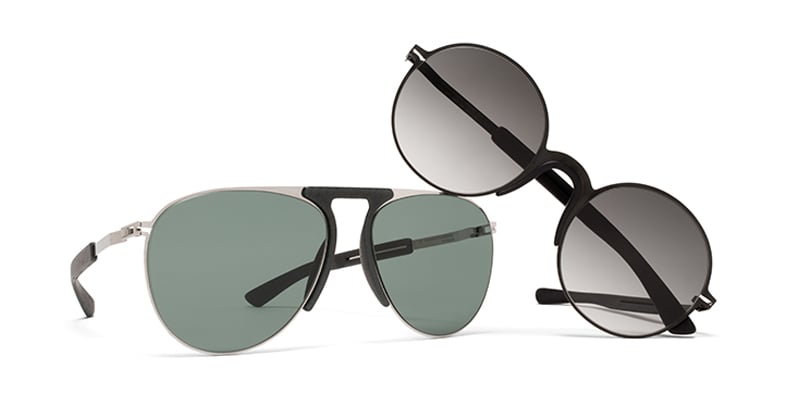
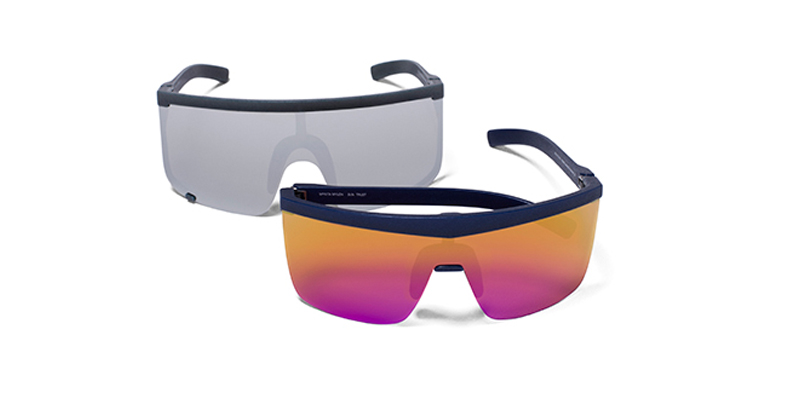
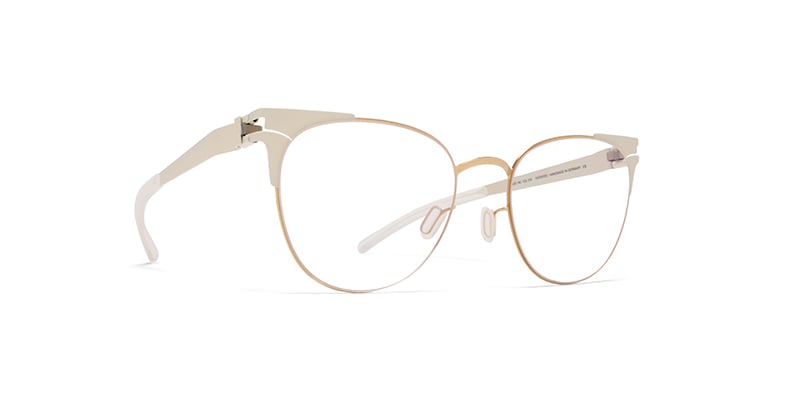
Mykita has made its glasses by hand in Berlin since 2003 and now works in a listed brick building on the Spree in Kreuzberg. What sets the brand apart is a patented hinge that needs neither screws nor soldered joints. The name comes from the Kita, the German word for a day nursery, because the rooms of one held the very first workshop of the brand.
A brick building on the Spree in Kreuzberg
Mykita works at Koepenicker Strasse 20 in Kreuzberg, in a red brick building right on the Spree that served as a dye works and factory from the middle of the nineteenth century and stands under monument protection. The house was rebuilt by Gruentuch Ernst Architekten and taken over in 2024; before that the brand spent ten years in the Pelikanhaus on Ritterstrasse and earlier still on Brunnenstrasse in Mitte. Around three thousand eight hundred square metres are available, two hundred and forty people from thirty-five nations work here, and more than a hundred and ten of them build the frames by hand. Design, prototyping and production therefore sit under one roof. Anyone wanting to try the glasses on does not come here but goes to one of the two Berlin shops, on Rosa-Luxemburg-Strasse in Mitte or on Budapester Strasse by the zoo, where eye tests and lenses are part of the service. The frames are made a few kilometres from the shops, which in this trade is far from usual.
A hinge without screws and six collections
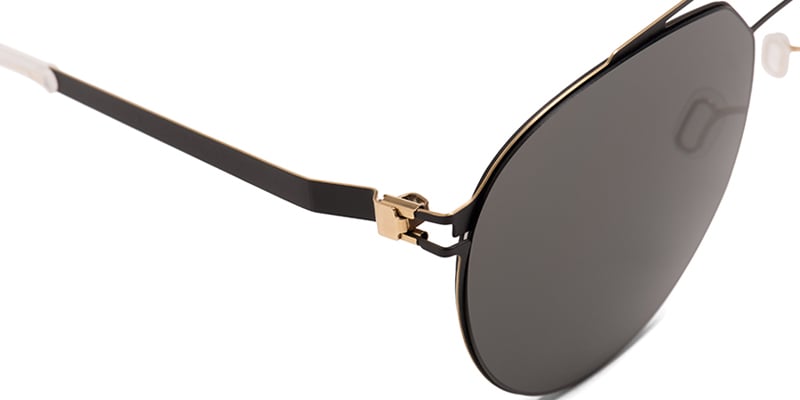
Mykita was founded in 2003 by Harald Gottschling, Daniel Haffmans, Philipp Haffmans and Moritz Krueger, who has led the company as managing director and creative director since 2015. The name is an abbreviation with a Berlin background, because the first workshop sat in a former day nursery. What made the brand technically known arrived a year after the founding and is patented to this day. On the metal frames the temples are clipped in, entirely without screws and without soldering, which makes the glasses lighter and more durable at once. Out of that idea six collections have grown: number one in stainless steel, number two in acetate, the very light Lite line, the Decades range modelled on styles of the twentieth century, the Luxe line in natural materials and Mylon in laser-sintered polyamide, where the leftover powder is used again. Alongside them came work with Leica, Moncler and Rimowa as well as a long row of design prizes.

Top10 Redaktion
Erfahrungsbericht vom 07.10.2024
Price level
The frames sit in the upper segment of handmade designer eyewear. Prescription and sun lenses are added depending on strength and finish.
The collections
Number one in stainless steel, number two in acetate, the light Lite line, the Decades range after styles of the twentieth century, the Luxe line in natural materials and Mylon in laser-sintered polyamide.
The hinge
The metal frames manage without screws and without soldered joints. The temples are clipped in, and the construction has been patented since 2004.
Manufactory
Production happens at Mykita Haus, Koepenicker Strasse 20 in Kreuzberg, a listed brick building on the Spree of around three thousand eight hundred square metres. Two hundred and forty people from thirty-five nations work there, more than a hundred and ten of them on the frames.
The Berlin shops
Rosa-Luxemburg-Strasse 6 in Mitte and Budapester Strasse 38 to 50 in Charlottenburg. The manufactory itself is not a sales room.
Service in the shops
Eye test, style advice, prescription and sun lenses, blue light filter, frame repair and free eyewear care. Budapester Strasse additionally offers an express lens service.
Founded
In 2003 by Harald Gottschling, Daniel Haffmans, Philipp Haffmans and Moritz Krueger. Moritz Krueger has led the company as managing director and creative director since 2015.
The name
It goes back to the day nursery in whose rooms the first workshop stood.
Awards
Red Dot Design Award, iF Product Design Award, iF Material Award for Mylon and German Design Award.
Collaborations
Among others with Leica, Moncler, Rimowa, Bernhard Willhelm and Damir Doma.
Transport
The manufactory lies between the stations Heinrich-Heine-Strasse and Schlesisches Tor. The shop in Mitte is at Rosa-Luxemburg-Platz, the western shop by the zoo.
Address
Koepenicker Strasse 20, 10997 Berlin.
Opening Hours
- Mon to Sat: 12:00 PM – 00:00
- Sun: Closed