Walk through the Scheunenviertel
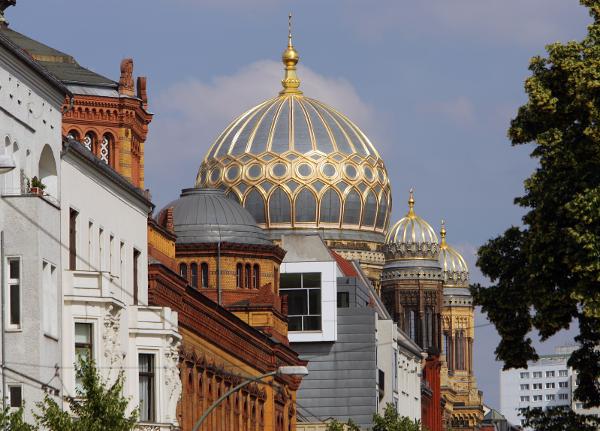
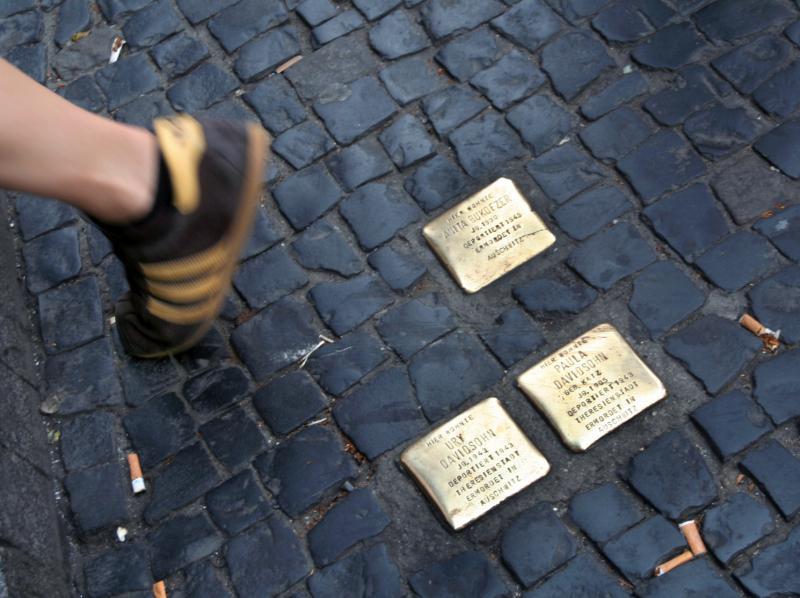
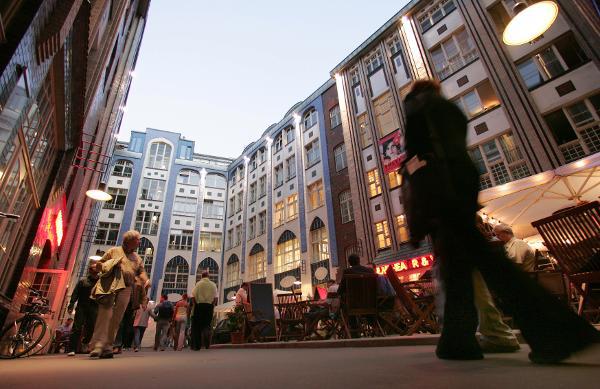
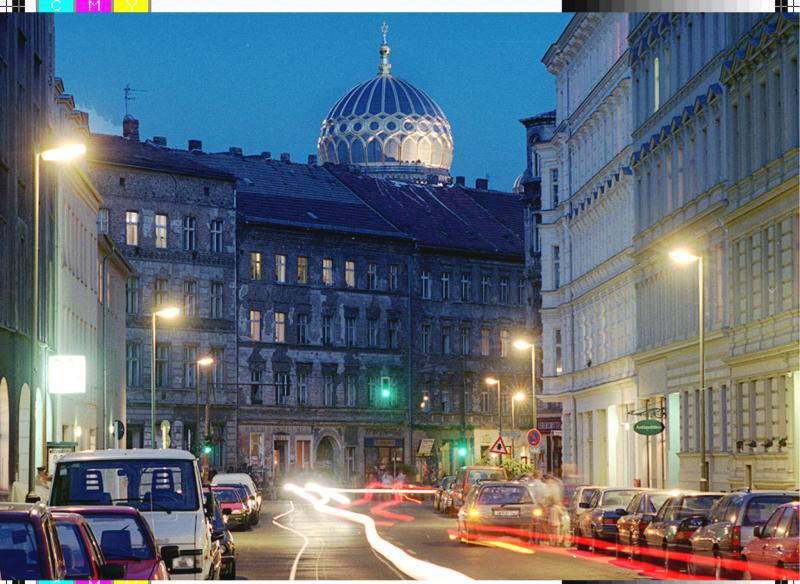
Between Hackescher Markt and Oranienburger Strasse, Art Nouveau courtyards from 1905, the New Synagogue from 1866, the Old Jewish Cemetery, and the Otto Weidt Workshop for the Blind Museum are located within a few hundred meters, with 'Stolpersteine' (stumbling blocks) everywhere. A school trip in Berlin can fill a morning here without a single ticket.
Walk through the Scheunenviertel: Berlin History on Foot
The name dates back to the 17th century, when the Great Elector Friedrich Wilhelm ordered the fire-hazardous barns to be moved outside the city wall. Today, the district is officially called Spandauer Vorstadt, but the old name has persisted. Within a few hundred meters, backyards, a synagogue, a cemetery, and museums are so close together that a class can fill the morning without a single means of transport.
A good starting point is Hackescher Markt, with connections to the S-Bahn and several tram lines. Right next to it are the Hackesche Höfe, eight interconnected courtyards covering 9,200 square meters of floor space, built from 1905 according to plans by Kurt Berndt. The Art Nouveau facade in the first courtyard is by August Endell. The area has been a listed monument since 1977, and access is free.
Stations in the Scheunenviertel: New Synagogue, Workshop for the Blind, and Stolpersteine
The New Synagogue on Oranienburger Strasse was consecrated in 1866 and, with 3,200 seats, was the largest synagogue in Germany. During the Night of Broken Glass (Pogromnacht) in 1938, police chief Wilhelm Krützfeld prevented worse, but bombs destroyed the building in 1943, and the main hall was blown up in 1958. Since 1991, the rebuilt dome once again bears the Star of David. School classes pay two Euros admission.
At Rosenthaler Strasse 39 is the Otto Weidt Workshop for the Blind Museum, where from 1940 Otto Weidt tried to protect blind and deaf Jewish employees from deportation. The windowless hiding place behind a wardrobe can still be seen today; admission and guided tours for groups of eight or more people are free. Große Hamburger Strasse leads to the Old Jewish Cemetery, where burials took place between 1672 and 1827, and which commemorates Moses Mendelssohn. In between, “Stolpersteine”, the ten by ten centimeter brass plaques by Gunter Demnig, are scattered everywhere.

Top10 Redaktion
Erfahrungsbericht vom 15.10.2026
Price Level
Courtyards, cemetery and Stolpersteine are free, New Synagogue 2 Euros for school classes, Otto Weidt Workshop for the Blind Museum is free.
Duration
A morning is enough for four to five stations on foot.
Public Transport
S Hackescher Markt (S3, S5, S7, S9), Tram M1, M4, M5 and M6, U8 Weinmeisterstraße.
Parking
There are no parking spaces at the stations, arriving by public transport is much easier.
Registration
Book guided tours at the Otto Weidt Workshop for the Blind Museum six to eight weeks in advance, groups of 15 or more only by appointment.
Highlight
The windowless hiding place behind the wardrobe in the Workshop for the Blind.
Security
There is a metal detector in the New Synagogue; photography is prohibited throughout the building.
Age Recommendation
Recommended for guided tours in the Workshop for the Blind from grade 5 upwards.
Opening Hours
Address
Oranienburger Straße 35, 10117 Berlin, Deutschland